 뒤로
뒤로Nutrition Fundamentals
 06:17
06:17

이 집합의 용어 (31)
Nutrients are chemical compounds in foods that provide fuel for energy, growth, maintenance, and regulate body processes.
Taste is the primary factor that drives most food choices.
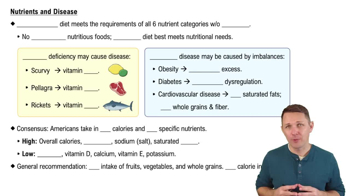
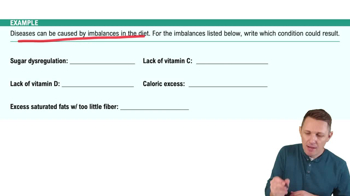
Heart disease, cancer, stroke, and diabetes are leading causes of death linked to diet.
A kilocalorie is the amount of energy needed to raise the temperature of 1 kilogram of water by 1 degree Celsius.
Carbohydrates provide 4 calories per gram.
Protein provides 4 calories per gram.
Fat provides 9 calories per gram.
Metabolism refers to chemical reactions in cells that convert calories in food to energy.
Nutrition is the science studying how nutrients and compounds in foods nourish and affect body functions and health.
Macronutrients are energy-containing essential nutrients needed in higher amounts: carbohydrates, lipids, and proteins.
Macronutrients contain carbon, hydrogen, oxygen, and nitrogen in proteins.
Micronutrients are nutrients needed in smaller amounts, including vitamins and minerals.
Vitamins are organic compounds from food that assist enzymes in speeding up chemical reactions.
Minerals are inorganic substances essential for body processes and structures.
Carbohydrates, lipids, and proteins provide energy in the form of kilocalories.
Water acts as a fluid medium, aids chemical reactions, maintains temperature, transports nutrients and waste, lubricates joints, and cushions organs.
Vitamins, minerals, and water regulate metabolism.
Carbohydrates, fats, and proteins are organic nutrients containing carbon.
Minerals are inorganic nutrients that do not contain carbon.
Enzymes are substances that speed up chemical reactions in the body.
Phytochemicals are nonnutritive plant compounds that may help fight chronic diseases.
Fiber is a nondigestible polysaccharide that helps fight many diseases.
Supplements are beneficial when nutrient needs are higher or diet restrictions exist.
The American diet is high in added sugar, sodium, saturated fats, and calories but low in vitamin D, calcium, potassium, and fiber.
BMI is calculated as \(\frac{weight\ (kg)}{height\ (m)^2}\).
Overweight is extra weight relative to height with a BMI of 25-29.9.
Obesity is excessive body fat with a BMI of 30 or higher.
Obesity is caused by consuming more calories than needed and/or burning fewer calories due to sedentary lifestyles.
Obesity increases the risk of type 2 diabetes, heart disease, cancer, and stroke.
The scientific method is a process to generate sound research findings through observation, hypothesis, experimentation, and peer review.
A double-blind placebo-controlled experiment is a study where neither scientists nor subjects know who receives treatment or placebo, controlling variables for both groups.