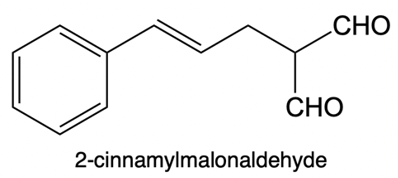
Outline the synthetic pathway for the creation of 2-cinnamylmalonaldehyde from propylbenzene.
A
B
C
D
0 댓글
검증된 단계별 안내
1
Start with propylbenzene as the initial reactant. The goal is to introduce functional groups that will lead to the formation of 2-cinnamylmalonaldehyde.
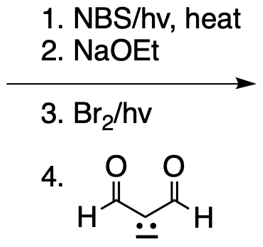
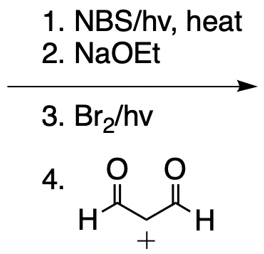
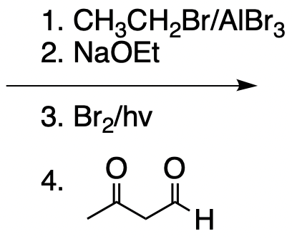
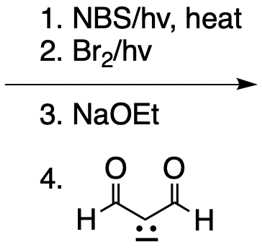
Perform a radical bromination using N-bromosuccinimide (NBS) under light (hv) and heat conditions. This will selectively brominate the benzylic position of propylbenzene, forming benzyl bromide.
Next, treat the benzyl bromide with sodium ethoxide (NaOEt). This step involves a nucleophilic substitution reaction where the ethoxide ion will replace the bromine atom, forming an ethyl benzyl ether.
Introduce another bromine atom at the benzylic position using bromine (Br2) under light (hv) conditions. This step prepares the molecule for further functionalization.
Finally, perform a reaction with malonaldehyde. The malonaldehyde will react with the benzylic bromide through a nucleophilic addition, forming the desired 2-cinnamylmalonaldehyde structure.




 검증된 단계별 안내

