- 작성 시간을 절약하려면 워크시트를 다운로드하세요
- 연습 문제를 풀기 시작해
- 막히면 영상 해답을 보세요
- 더 많은 인사이트를 원하시면 요약을 참고하세요

In the addition reaction of Cl2 to buta-1,3-diene at low temperatures, it produces 60 % of product A and 40 % of product B. However, when the same reaction is carried out at a higher temperature, the product ratio changes to 10 % of A and 90% of B.
(a) Propose a mechanism for this reaction and show the structures of products A and B.
(b) Explain why product A is predominant at low temperatures, while product B is favored at high temperatures.
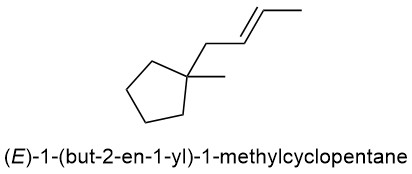
Provide a suitable allylic halide and a Grignard reagent that could be used to synthesize (E)-1-(but-2-en-1-yl)-1-methylcyclopentane.
Draw the substitution and elimination products formed in the following reaction:
1-(bromomethyl)-2-methylcyclohex-1-ene heated with methanol
Which is the correct sequence of steps in the radical mechanism of allylic halogenation?
In allylic bromination, why does NBS result in higher selectivity than Br2?