- 작성 시간을 절약하려면 워크시트를 다운로드하세요
- 연습 문제를 풀기 시작해
- 막히면 영상 해답을 보세요
- 더 많은 인사이트를 원하시면 요약을 참고하세요

Determine whether the ion given below is aromatic, antiaromatic, or nonaromatic. If the ion is aromatic/antiaromatic, calculate the n in the Hückel's/Breslow's rule. If it is nonaromatic, justify your answer using the rules of aromaticity.

Specify whether the ion below is aromatic, nonaromatic, or antiaromatic. If the ion is aromatic/antiaromatic, determine the value of n in Hückel's/Breslow's rule. If the ion is nonaromatic, explain your answer using the rules of aromaticity.

Using the rules of aromaticity, classify the given ion below as aromatic, antiaromatic, or nonaromatic. If classified as aromatic/antiaromatic, determine the value of n in Hückel's/Breslow's rule. If classified as nonaromatic, provide an explanation.
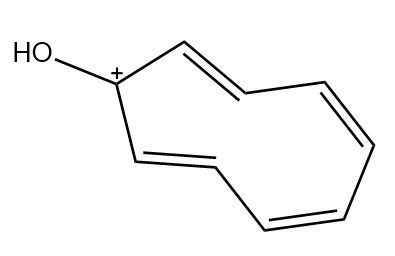
Is the given molecule antiaromatic, aromatic, or nonaromatic? If it is aromatic, what is its n in Hückel's rule? If not, why does it break the aromaticity rule?

Which of these are aromatic structures?
