Substitution Comparison
- 작성 시간을 절약하려면 워크시트를 다운로드하세요
- 연습 문제를 풀기 시작해
- 막히면 영상 해답을 보세요
- 더 많은 인사이트를 원하시면 요약을 참고하세요

Substitution Comparison
7 문제점
문제 1객관식
Determine whether the given nucleophile favors an SN1 or SN2 reaction.

문제 2객관식
With the given solvent, what kind of substitution reaction is most likely to take place?

문제 3객관식
Draw a plausible mechanism for the substitution reaction shown below.

문제 4객관식
Consider the substitution reaction below:

What is (are) its product(s)? Does a rearrangement occur?
문제 5객관식
The given benzylic iodide is inert toward SN1 and SN2 reactions. Explain why.

문제 7객관식
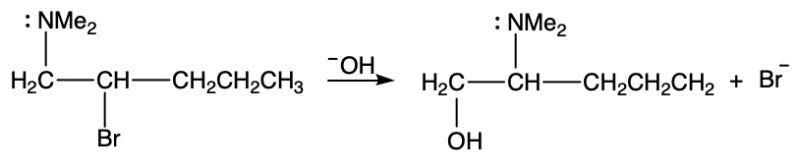
In the presence of a strong electrophile, the following reaction should have occurred via bimolecular substitution, yet rearrangement proceeded. Suggest a mechanism to explain the enhanced rate and rearrangement observed in this unusual reaction. Ignore stereochemistry. Note that “Me” is the abbreviation for methyl.