
교과서 질문
The alkyl carbocation is estimated to be 15 kcal/mol more stable than the alkenyl carbocation. If this is also the difference in the energies of the transition state leading to each, what is the expected rate difference?
<IMAGE>
1053
views


 검증된 단계별 안내
 07:12
07:12
 3:39
3:39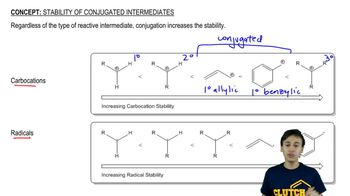 04:31
04:31The alkyl carbocation is estimated to be 15 kcal/mol more stable than the alkenyl carbocation. If this is also the difference in the energies of the transition state leading to each, what is the expected rate difference?
<IMAGE>
We have studied the following reactions in previous chapters. For each, (i) indicate which reaction sheets they should appear on, (ii) show the best structure to use to represent them, and (iii) write the notes you could put in the margin so that the mechanism is implied.
(b) Radical halogenation of an alkane
Predict the major products resulting from the addition of one equivalent of HX to the following alkynes.
(b)
When sodium generates electrons in the presence of ammonia, these electrons persist in solution, giving the blue color. However, electrons do not persist when sodium is added to water. Why?
The following deprotonation step occurs during the trans reduction of an alkyne. Calculate Keq for this reaction.
Sodium amide, the base we use to deprotonate terminal alkynes, is synthesized by reducing ammonia via a mechanism similar to the reduction of alkynes in Figure 10.21. Suggest a mechanism for this reaction.