Ch. 27 - Carbohydrates, Nucleic Acids, and Lipids
Mullins - Organic Chemistry: A Learner Centered Approach 1st Edition
Mullins1st EditionOrganic Chemistry: A Learner Centered ApproachISBN: 9780137566471당신이 사용하는 게 아니라요?교과서 변경
26장, 문제 5a

In each pair, which would you expect to have the higher melting point?
(a)

검증된 단계별 안내
1
Step 1: Analyze the molecular structures of the two compounds. The first compound has a bulky tert-butyl group attached to a cyclohexane ring, while the second compound has a linear alkyl chain attached to a cyclohexane ring.
Step 2: Consider the impact of molecular symmetry and packing efficiency on melting point. Molecules with higher symmetry and better packing tend to have higher melting points.
Step 3: Evaluate the steric hindrance caused by the bulky tert-butyl group in the first compound. This group disrupts the packing efficiency, making it harder for the molecules to form a solid lattice.
Step 4: Compare the linear alkyl chain in the second compound. Linear chains generally allow for better packing in the solid state, leading to a higher melting point.
Step 5: Conclude that the second compound, with the linear alkyl chain, is expected to have a higher melting point due to its better packing efficiency compared to the first compound with the bulky tert-butyl group.

비슷한 문제에 대한 검증된 영상 답변:

이 영상 해법은 위 문제에 도움이 된다고 튜터들이 추천한 것입니다.

주요 개념

질문에 올바르게 답하기 위해 반드시 이해해야 하는 핵심 개념들은 다음과 같습니다.

Melting Point

The melting point of a substance is the temperature at which it transitions from a solid to a liquid. It is influenced by the strength of intermolecular forces present in the substance. Generally, compounds with stronger intermolecular forces, such as hydrogen bonds or ionic interactions, exhibit higher melting points compared to those with weaker forces like van der Waals interactions.
추천 영상:
03:19
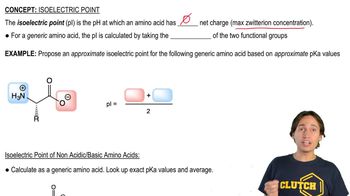
Definition of Isoelectric Point

Structural Isomerism

Structural isomerism occurs when compounds have the same molecular formula but different structural arrangements of atoms. This can lead to variations in physical properties, including melting points. In the given question, the two compounds are structural isomers, and their differing structures can significantly affect their melting points due to variations in packing efficiency and intermolecular interactions.
추천 영상:
06:47
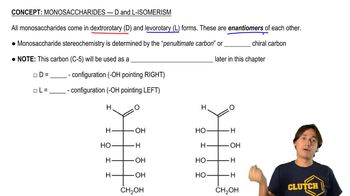
Monosaccharides - D and L Isomerism

Steric Hindrance

Steric hindrance refers to the repulsion between atoms that occurs when they are brought close together, often due to the size of the groups attached to them. In organic compounds, increased steric hindrance can lead to less efficient packing in the solid state, which typically results in lower melting points. Understanding the steric effects in the given compounds is crucial for predicting their melting point behavior.
추천 영상:
02:53
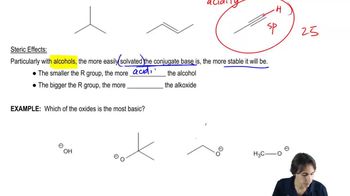
Understanding steric effects.