
Ch. 17 - Reactions of Aromatic Compounds
Wade - Organic Chemistry 9th Edition
Wade9th EditionOrganic ChemistryISBN: 9780135213728당신이 사용하는 게 아니라요?교과서 변경
17장, 문제 15a

Propose products (if any) and mechanisms for the following AlCl3-catalyzed reactions:
a. chlorocyclohexane with benzene

검증된 단계별 안내
1
Step 1: Recognize that this reaction involves Friedel-Crafts alkylation, a common electrophilic aromatic substitution reaction catalyzed by AlCl₃. The chlorocyclohexane serves as the alkylating agent, and benzene acts as the aromatic substrate.
Step 2: Understand the role of AlCl₃. It acts as a Lewis acid and interacts with the chlorine atom in chlorocyclohexane, forming a complex that generates a cyclohexyl carbocation (C₆H₁₁⁺). This carbocation is the electrophile in the reaction.
Step 3: Benzene, as an aromatic compound, has a high electron density in its π-system. The cyclohexyl carbocation attacks the benzene ring, leading to the formation of a sigma complex (arenium ion). This intermediate temporarily disrupts the aromaticity of benzene.
Step 4: The sigma complex undergoes deprotonation at the site of electrophilic attack, restoring the aromaticity of benzene. The final product is cyclohexylbenzene (C₆H₅-C₆H₁₁).
Step 5: Regenerate the AlCl₃ catalyst. The chloride ion (Cl⁻) released during the deprotonation step combines with the AlCl₃ complex to reform AlCl₄⁻, ensuring the catalyst is available for further reactions.

비슷한 문제에 대한 검증된 영상 답변:

이 영상 해법은 위 문제에 도움이 된다고 튜터들이 추천한 것입니다.
영상 길이:
5m

주요 개념

질문에 올바르게 답하기 위해 반드시 이해해야 하는 핵심 개념들은 다음과 같습니다.

Electrophilic Aromatic Substitution

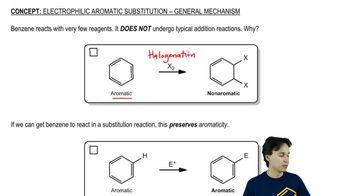
Electrophilic aromatic substitution (EAS) is a fundamental reaction in organic chemistry where an electrophile replaces a hydrogen atom on an aromatic ring. In this context, the benzene acts as a nucleophile, attacking the electrophile generated from chlorocyclohexane in the presence of AlCl3, which enhances the electrophilicity of the chlorocyclohexane.
추천 영상:
03:07
EAS Review

Lewis Acid Catalysis

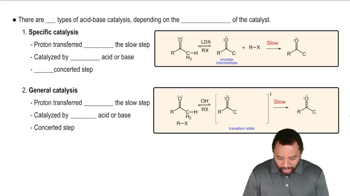
Lewis acid catalysis involves the use of a Lewis acid, such as AlCl3, to facilitate chemical reactions by accepting an electron pair. In this reaction, AlCl3 coordinates with the chlorine atom of chlorocyclohexane, forming a more reactive carbocation that can then participate in the electrophilic aromatic substitution with benzene.
추천 영상:
가이드 코스
2:50
Acid-Base Catalysis Concept 3

Carbocation Stability

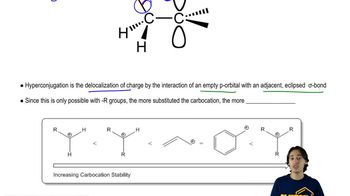
Carbocation stability is crucial in determining the outcome of reactions involving carbocations. The stability of the carbocation formed during the reaction influences the likelihood of substitution occurring. In this case, the stability of the carbocation generated from chlorocyclohexane will affect the efficiency of the electrophilic attack on the benzene ring.
추천 영상:
05:58
Determining Carbocation Stability
관련 실천
교과서 질문

Biphenyl is two benzene rings joined by a single bond. The site of substitution for a biphenyl is determined by (1) which phenyl ring is more activated (or less deactivated), and (2) which position on that ring is most reactive, using the fact that a phenyl substituent is activating and ortho, para-directing.

b. Predict the mononitration products of the following compounds

(iv)

1557
views
교과서 질문

Propose products (if any) and mechanisms for the following AlCl3-catalyzed reactions:

c. 3-chloro-2,2-dimethylbutane with isopropylbenzene

2956
views
교과서 질문

Biphenyl is two benzene rings joined by a single bond. The site of substitution for a biphenyl is determined by (1) which phenyl ring is more activated (or less deactivated), and (2) which position on that ring is most reactive, using the fact that a phenyl substituent is activating and ortho, para-directing.

b. Predict the mononitration products of the following compounds

(v)

1376
views
교과서 질문

For each reaction, show the generation of the electrophile and predict the products.

c. tert-butylbenzene + 2-methylpropene + HF

971
views
교과서 질문

Propose products (if any) and mechanisms for the following AlCl3-catalyzed reactions:

b. methyl chloride with anisole

631
views
교과서 질문

Biphenyl is two benzene rings joined by a single bond. The site of substitution for a biphenyl is determined by (1) which phenyl ring is more activated (or less deactivated), and (2) which position on that ring is most reactive, using the fact that a phenyl substituent is activating and ortho, para-directing.

b. Predict the mononitration products of the following compounds

(iii)

674
views