Skip to main content
Personal Health
나의 코스
배우기
시험 준비
AI 튜터
학습 가이드
플래시카드
앱을 사용해 보세요
나의 코스
배우기
시험 준비
AI 튜터
학습 가이드
플래시카드
앱을 사용해 보세요
뒤로
Sleep Disorders definitions
카드를 뒤집기 위해 탭할 수 있습니다.
Insomnia
카드를 뒤집기 위해 탭할 수 있습니다.
👆
Insomnia
Condition marked by persistent difficulty initiating or maintaining sleep, often linked to depression, heart disease, and stress.
진행 상황 추적
컨트롤 버튼이 '내비게이션' 모드로 변경되었습니다.
1/15
관련 플래시카드
관련 실천
추천 영상
Sleep Disorders quiz
Sleep Disorders
20 용어
Sleep Disorders quiz #1
Sleep Disorders
10 용어
Sleep Disorders
Ch.3 Stress Management and Sleep
5 문제점
주제
Nicole
Sleep and Health
Ch.3 Stress Management and Sleep
5 문제점
주제
Nicole
Ch.3 Stress Management and Sleep - Part 1 of 2
4 주제
12 문제점
장
Ally
Ch.3 Stress Management and Sleep - Part 2 of 2
3 주제
9 문제점
장
Nicole
VideoThumbView.guidedCourse
1:16
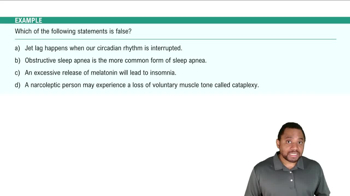
Sleep Disorders Example 1
59
views
1
rank
VideoThumbView.guidedCourse
2:36
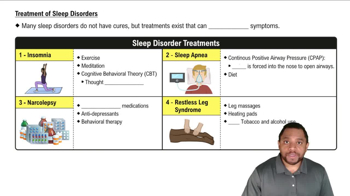
Treatment of Sleep Disorders Concept 2
88
views
1
rank
VideoThumbView.guidedCourse
1:44
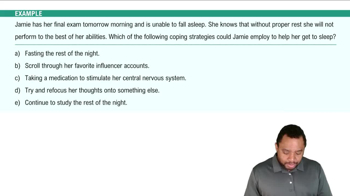
Treatment of Sleep Disorders Example 2
54
views
이 집합의 용어 (15)
하이드의 정의
Insomnia
Condition marked by persistent difficulty initiating or maintaining sleep, often linked to depression, heart disease, and stress.
Sleep Apnea
Breathing disorder during sleep with repeated pauses lasting at least ten seconds, often accompanied by loud snoring.
Obstructive Sleep Apnea
Type of sleep apnea caused by relaxed throat muscles and tongue blocking the airway, resulting in disrupted breathing.
Central Sleep Apnea
Less common form of sleep apnea involving a disconnect between brain signals and muscle movement, often related to alcohol use.
Narcolepsy
Neurological disorder affecting sleep-wake cycles, causing sudden, uncontrollable episodes of sleep and related symptoms.
Cataplexy
Sudden loss of muscle tone often triggered by strong emotions, commonly associated with narcolepsy.
Paralysis
Temporary inability to move or speak, frequently occurring during transitions between sleep and wakefulness in narcolepsy.
Hallucinations
Vivid sensory experiences that may occur during sleep-wake transitions, often linked to severe narcolepsy.
Restless Leg Syndrome
Neurological disorder causing uncomfortable sensations in the legs, leading to an urge to move and possible pain.
Cognitive Behavioral Therapy
Psychological treatment focusing on changing negative thought patterns to reduce stress and improve sleep quality.
Thought Refocusing
Technique involving replacement of negative thoughts with positive ones to lower stress and facilitate sleep.
CPAP Machine
Device delivering continuous positive airway pressure through the nose to keep airways open during sleep.
Stimulant Medications
Drugs prescribed to promote wakefulness and manage symptoms of narcolepsy by increasing alertness.
Sleep Hygiene
Set of lifestyle practices aimed at improving sleep quality and consistency, such as exercise and reduced substance use.
Antidepressants
Medications that can boost energy and help manage sleep disorders, especially narcolepsy.
 뒤로뒤로
뒤로뒤로

 1:16
1:16