Skip to main content
Physics with Calculus
나의 코스
배우기
시험 준비
AI 튜터
학습 가이드
교과서적 해결책
플래시카드
탐험해 보세요
앱을 사용해 보세요
나의 코스
배우기
시험 준비
AI 튜터
학습 가이드
교과서적 해결책
플래시카드
탐험해 보세요
앱을 사용해 보세요
뒤로
Physics Chapter 23: Electric Charge, Field, Potential, and Energy
카드를 뒤집기 위해 탭할 수 있습니다.
What letter(s) represent electric charge?
카드를 뒤집기 위해 탭할 수 있습니다.
👆
What letter(s) represent electric charge?
Electric charge is represented by \(q\) or \(Q\).
진행 상황 추적
컨트롤 버튼이 '내비게이션' 모드로 변경되었습니다.
1/20
추천 영상
VideoThumbView.guidedCourse
01:06
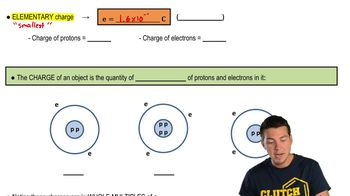
Charge of Atom
17782
views
488
rank
VideoThumbView.guidedCourse
05:37
Electric Charge
28773
views
918
rank
4
comments
VideoThumbView.guidedCourse
04:32
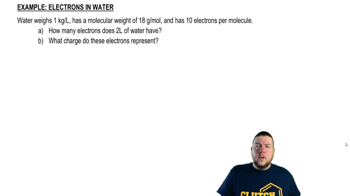
Electrons In Water (Using Density)
15131
views
308
rank
16
comments
이 집합의 용어 (20)
하이드의 정의
What letter(s) represent electric charge?
Electric charge is represented by \(q\) or \(Q\).
What is the SI unit of electric charge?
The SI unit of electric charge is the
coulomb (C)
.
What letter represents the electric field?
The electric field is represented by the letter \(E\).
What are the SI units of the electric field?
The electric field is measured in
newtons per coulomb (N/C)
or
volts per meter (V/m)
.
What letter represents work in physics equations?
Work is represented by the letter \(W\).
What is the SI unit of work?
Work is measured in
joules (J)
.
What letter represents electric potential energy?
Electric potential energy is represented by the letter \(U\).
What is the SI unit of electric potential energy?
Electric potential energy is measured in
joules (J)
.
What letter represents electric potential (voltage)?
Electric potential is represented by the letter \(V\).
What is the SI unit of electric potential?
Electric potential is measured in
volts (V)
.
Write the equation relating work done by a conservative force to potential energy.
The work done by a conservative force is related to potential energy by \(W = -\Delta U\).
Write the equation for electric potential energy between two point charges.
Electric potential energy between two point charges is \(U = \frac{1}{4 \pi \epsilon_0} \frac{q_1 q_2}{r}\).
Write the equation for electric potential due to a point charge at point P.
Electric potential at point P due to a point charge is \(V(P) = \frac{1}{4 \pi \epsilon_0} \frac{q}{r}\).
How is the zero of electric potential generally defined for point charges?
The electric potential is defined as zero at infinite distance: \(V_r = 0 \text{ as } r \to \infty\).
How do you calculate the change in electric potential from the electric field?
The change in electric potential is \(\Delta V = V_{final} - V_{initial} = - \int_{l_{initial}}^{l_{final}} \mathbf{E} \cdot d\mathbf{l}\).
How do you find the electric field from the electric potential?
The electric field component is the negative spatial derivative of potential: \(E_x = -\frac{\partial V}{\partial x}\).
What is the vector relation between electric field and electric potential?
The electric field is the negative gradient of the electric potential: \(\mathbf{E} = -\nabla V\).
Write the equation relating change in electric potential energy to change in electric potential.
The change in electric potential energy is \(\Delta U = q \Delta V\).
Write the equation defining kinetic energy of a particle.
Kinetic energy is defined as \(K = \frac{1}{2} m v^2\).
Write the conservation of energy equation introduced in this chapter.
Conservation of energy: \(K_A + U_A = K_B + U_B\) with \(U = qV\).
 뒤로뒤로
뒤로뒤로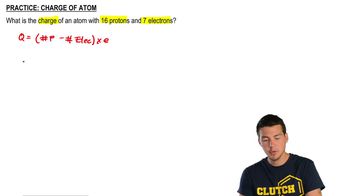
 01:06
01:06