Skip to main content
Introduction to Psychology
나의 코스
배우기
시험 준비
AI 튜터
학습 가이드
플래시카드
탐험해 보세요
앱을 사용해 보세요
나의 코스
배우기
시험 준비
AI 튜터
학습 가이드
플래시카드
탐험해 보세요
앱을 사용해 보세요
뒤로
Communication in the Nervous System definitions
카드를 뒤집기 위해 탭할 수 있습니다.
Neuron
카드를 뒤집기 위해 탭할 수 있습니다.
👆
Neuron
Specialized cell transmitting electrochemical signals, integrating inputs to generate action potentials for communication.
진행 상황 추적
컨트롤 버튼이 '내비게이션' 모드로 변경되었습니다.
1/15
관련 플래시카드
관련 실천
추천 영상
Communication in the Nervous System quiz #1
Communication in the Nervous System
19 용어
Communication in the Nervous System
3. Biological Psychology
7 문제점
주제
Nicole
Organization of the Brain
3. Biological Psychology
7 문제점
주제
Nicole
3. Biological Psychology - Part 1 of 2
5 주제
14 문제점
장
Nicole
3. Biological Psychology - Part 2 of 2
5 주제
12 문제점
장
Nicole
VideoThumbView.guidedCourse
00:29
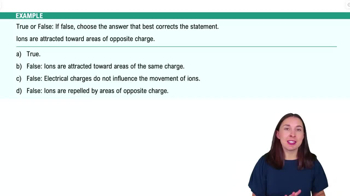
Communication in the Nervous System Example 1
783
views
8
rank
VideoThumbView.guidedCourse
04:23
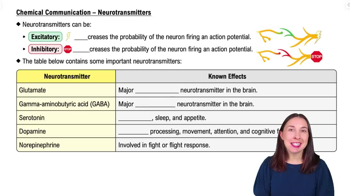
Chemical Communication – Neurotransmitters Part 1
865
views
6
rank
VideoThumbView.guidedCourse
03:17
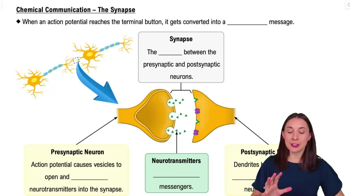
Chemical Communication – The Synapse
877
views
9
rank
이 집합의 용어 (15)
하이드의 정의
Neuron
Specialized cell transmitting electrochemical signals, integrating inputs to generate action potentials for communication.
Action Potential
Rapid voltage change within a neuron, triggered at threshold, enabling electrical signaling along the axon.
Resting Potential
Stable internal voltage of about −70 mV in a neuron, maintained when not actively transmitting signals.
Threshold
Critical voltage, typically −55 mV, at which an action potential is initiated in a neuron.
Ion Channel
Protein structure in the cell membrane allowing selective movement of ions, crucial for neural signaling.
Voltage-Gated Channel
Membrane protein opening or closing in response to specific voltage changes, regulating ion flow during action potentials.
Depolarization
Phase where the neuron's internal voltage becomes more positive due to sodium influx, initiating the action potential.
Repolarization
Phase where the neuron's voltage returns toward negative values as potassium exits the cell after depolarization.
Refractory Period
Brief phase after an action potential when a neuron is less excitable, ensuring signals travel in one direction.
Synapse
Microscopic gap between neurons where chemical communication occurs via neurotransmitter release and binding.
Neurotransmitter
Chemical messenger released into the synapse, binding to receptors to modulate postsynaptic neuron activity.
Receptor
Specialized protein on the postsynaptic neuron that binds neurotransmitters, triggering changes in neural activity.
Glutamate
Major excitatory neurotransmitter in the brain, increasing the likelihood of postsynaptic neuron activation.
GABA
Primary inhibitory neurotransmitter in the brain, decreasing the probability of postsynaptic neuron firing.
Reuptake
Process where neurotransmitters are reabsorbed into the presynaptic neuron, recycling them for future signaling.
 뒤로뒤로
뒤로뒤로
 00:29
00:29