Skip to main content
Introduction to Psychology
나의 코스
배우기
시험 준비
AI 튜터
학습 가이드
플래시카드
탐험해 보세요
앱을 사용해 보세요
나의 코스
배우기
시험 준비
AI 튜터
학습 가이드
플래시카드
탐험해 보세요
앱을 사용해 보세요
뒤로
Organization of the Nervous System definitions
카드를 뒤집기 위해 탭할 수 있습니다.
Nervous System
카드를 뒤집기 위해 탭할 수 있습니다.
👆
Nervous System
Complex network of neurons transmitting electrochemical information, coordinating sensation, movement, and internal regulation.
진행 상황 추적
컨트롤 버튼이 '내비게이션' 모드로 변경되었습니다.
1/15
관련 플래시카드
관련 실천
추천 영상
Organization of the Nervous System quiz #1
Organization of the Nervous System
30 용어
Organization of the Nervous System
3. Biological Psychology
7 문제점
주제
Nicole
Cells of the Nervous System
3. Biological Psychology
7 문제점
주제
Nicole
3. Biological Psychology - Part 1 of 2
5 주제
14 문제점
장
Nicole
3. Biological Psychology - Part 2 of 2
5 주제
12 문제점
장
Nicole
VideoThumbView.guidedCourse
01:06
Organization of the Nervous System Example 1
1035
views
16
rank
VideoThumbView.guidedCourse
01:46
Subdivisions of the PNS
961
views
15
rank
VideoThumbView.guidedCourse
04:32
Subdivisions of the Autonomic Nervous System
974
views
10
rank
이 집합의 용어 (15)
하이드의 정의
Nervous System
Complex network of neurons transmitting electrochemical information, coordinating sensation, movement, and internal regulation.
Central Nervous System
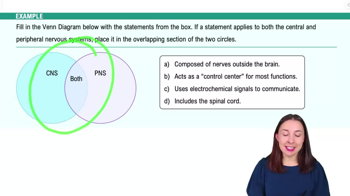
Control center composed of the brain and spinal cord, responsible for thoughts, emotions, memories, and motor commands.
Peripheral Nervous System
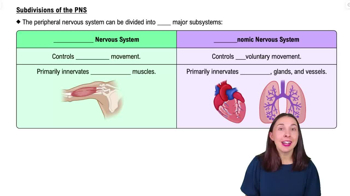
Network of nerves outside the brain and spinal cord, linking the body to the CNS for sensation and movement.
Brain
Organ within the CNS serving as the headquarters for processing thoughts, emotions, perceptions, and voluntary actions.
Spinal Cord
Bundle of nerve fibers in the CNS transmitting signals between the brain and the rest of the body.
Somatic Nervous System
Subsystem of the PNS controlling voluntary skeletal muscle movements and conscious motor actions.
Skeletal Muscle
Muscle tissue attached to bones, enabling voluntary movements such as writing, kicking, or lifting.
Autonomic Nervous System
Subsystem of the PNS regulating involuntary functions in organs, glands, and blood vessels without conscious control.
Sympathetic Division
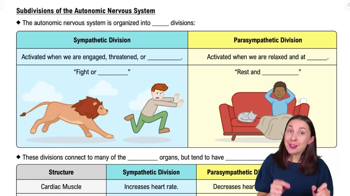
Branch of the ANS activating the fight-or-flight response, increasing heart rate and energy during stress or threat.
Parasympathetic Division
Branch of the ANS promoting rest-and-digest activities, slowing heart rate and enhancing digestion during relaxation.
Fight-or-Flight Response
Physiological reaction preparing the body for action under threat, marked by increased heart rate and alertness.
Rest-and-Digest System
State facilitated by the parasympathetic division, supporting relaxation, digestion, and energy conservation.
Antagonistic Effects
Opposing influences exerted by the sympathetic and parasympathetic divisions on shared organs to maintain balance.
Homeostasis
Dynamic equilibrium maintained by the nervous system through regulation of internal bodily functions.
Sensory Nerves
Nerve fibers in the PNS transmitting information about pain, pressure, and other sensations to the CNS.
 뒤로뒤로
뒤로뒤로
 01:06
01:06