Skip to main content
Introduction to Psychology
나의 코스
배우기
시험 준비
AI 튜터
학습 가이드
플래시카드
탐험해 보세요
앱을 사용해 보세요
나의 코스
배우기
시험 준비
AI 튜터
학습 가이드
플래시카드
탐험해 보세요
앱을 사용해 보세요
뒤로
The Endocrine System definitions
카드를 뒤집기 위해 탭할 수 있습니다.
Endocrine System
카드를 뒤집기 위해 탭할 수 있습니다.
👆
Endocrine System
Network of glands that secrete chemicals into the bloodstream, influencing body regulation with slower, longer-lasting effects than neural signals.
진행 상황 추적
컨트롤 버튼이 '내비게이션' 모드로 변경되었습니다.
1/14
관련 플래시카드
관련 실천
추천 영상
The Endocrine System quiz #1
The Endocrine System
14 용어
The Endocrine System
3. Biological Psychology
7 문제점
주제
Nicole
Genes and Environment
3. Biological Psychology
7 문제점
주제
Nicole
3. Biological Psychology - Part 1 of 2
5 주제
14 문제점
장
Nicole
3. Biological Psychology - Part 2 of 2
5 주제
12 문제점
장
Nicole
VideoThumbView.guidedCourse
03:41
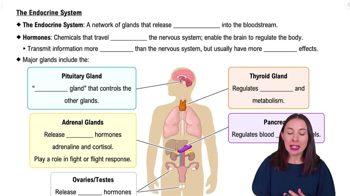
The Endocrine System
886
views
3
rank
VideoThumbView.guidedCourse
01:00
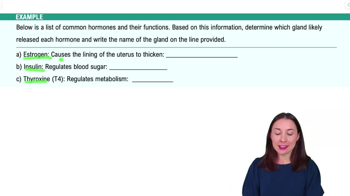
The Endocrine System Example 1
800
views
3
rank
이 집합의 용어 (14)
하이드의 정의
Endocrine System
Network of glands that secrete chemicals into the bloodstream, influencing body regulation with slower, longer-lasting effects than neural signals.
Pituitary Gland
Brain-based structure often called the master gland, coordinating and controlling hormone release from other glands.
Thyroid Gland
Throat-located gland crucial for managing energy levels and metabolic rate, impacting weight and vitality.
Pancreas
Organ beneath the liver responsible for maintaining blood sugar balance, essential for both health and cognitive function.
Adrenal Glands
Kidney-top structures that secrete stress-related chemicals, vital for immediate survival responses.
Ovaries
Female reproductive organs producing hormones that regulate reproductive cycles and influence behavior.
Testes
Male reproductive organs generating hormones that affect reproductive function and general health.
Hormones
Bloodstream-traveling chemicals that transmit regulatory signals, affecting organs and behavior over extended periods.
Cortisol
Adrenal-derived chemical involved in managing stress and modulating the body's response to threats.
Adrenaline
Substance released during emergencies, preparing the body for rapid action in threatening situations.
Metabolism
Set of processes regulated by the thyroid, determining energy use and influencing weight changes.
Blood Sugar
Level of glucose in circulation, tightly regulated by the pancreas to support brain and body function.
Sex Hormones
Chemicals from reproductive organs that shape reproductive abilities, health, and aspects of behavior.
Fight or Flight Response
Physiological reaction triggered by adrenal chemicals, enabling rapid adaptation to danger.
 뒤로뒤로
뒤로뒤로
 03:41
03:41