 뒤로
뒤로Chapter 2 part 2
 03:03
03:03
이 집합의 용어 (25)
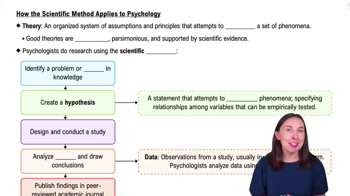
A falsifiable hypothesis is one that can be tested and potentially proven false, allowing objective evaluation of research.
Anecdotal evidence relies on personal stories or isolated examples and does not provide scientific proof.
Biased selection occurs when data supporting a claim is chosen while ignoring contradictory evidence, leading to misleading conclusions.
Appeal to authority uses expert opinion without supporting data, which can be problematic if the expert is biased.
Appeal to common sense relies on what seems obvious but may be incorrect, so it is not a valid scientific argument.
Standards include minimal stress, informed consent, debriefing, anonymity, and confidentiality.
Informed consent means participants receive enough information to agree freely and can opt out or withhold responses anytime.
Debriefing informs participants about the study’s purpose and any deception used, ensuring transparency and ethical treatment.
Ethical committees oversee humane treatment, including proper housing, feeding, sanitation, and minimizing harm.
Secure data storage allows replication of findings and ensures data integrity for scientific progress.
The null hypothesis assumes observed differences are due to random chance, not the experimental variable.
The experimental hypothesis suggests differences are caused by the variable controlled by the experimenter.
The p-value shows the probability results occurred by chance; p < 0.05 is typically considered statistically significant.
Descriptive statistics summarize data features, including frequency, central tendency, and variability.
Mean is the average, median is the middle value, and mode is the most frequent value.
In skewed data, mean, median, and mode differ, reflecting data asymmetry.
Variability shows how spread out scores are, using measures like range and standard deviation.
Standard deviation measures the average distance of scores from the mean.
Range is the difference between the highest and lowest scores in a dataset.
Effect size indicates the magnitude of difference between groups, beyond just statistical significance.
The replication crisis refers to many studies failing to replicate, highlighting the need for transparency and rigorous methods.
Quality research is objective, valid, reliable, generalizable, reduces bias, and is public and replicable.
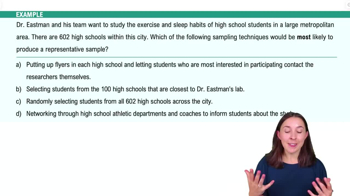
Random assignment helps minimize bias by equally distributing participant characteristics across groups.
Peer review involves experts evaluating research before publication to ensure quality and validity.
Replication confirms reliability by repeating studies and verifying results.