 뒤로
뒤로Chp 2 part 1
 03:03
03:03
이 집합의 용어 (22)
Fixed mindset assumes abilities are static, while a growth mindset believes effort leads to improvement and rewards.
Use multiple formats (visual, auditory, kinesthetic) together and apply evidence-based methods like retrieval practice, spaced repetition, and elaboration.
Challenges in reproducing some psychological findings, highlighting the need for transparency and rigorous methods.
Objective, valid, reliable measurements; generalizability; bias reduction; public availability; replicability.
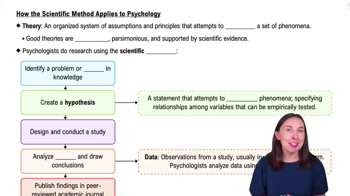
The initial inquiry guiding the research process, defining what the study aims to investigate.
A specific, testable prediction about the relationship between variables in a study.
Assumes observed differences in research are due to chance, not the experimental manipulation.
Suggests observed differences are due to the variable controlled by the experimenter.
Gathers data to describe the current state of participants using case studies, naturalistic observation, or surveys.
Examines relationships between two variables without manipulation.
Positive: both variables increase; Negative: one increases, other decreases; Zero: no relationship.
Manipulates one variable (IV) to observe its effect on another (DV), allowing causal conclusions.
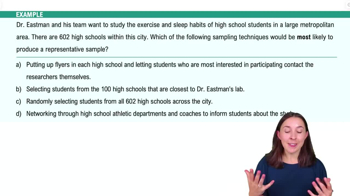
Participants are assigned to groups by chance to reduce bias and ensure comparability.
Control group does not receive treatment; experimental group receives the treatment or stimulus.
Factors outside the researcher's control that might influence the results, potentially biasing conclusions.
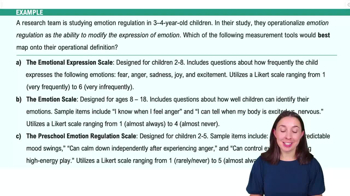
Measurements should be free from personal bias and based on observable phenomena.
The extent to which a measurement accurately reflects the concept it intends to measure.
Includes researcher bias, participant bias, Hawthorne effect, social desirability, demand characteristics, and placebo effect.
Anonymity, confidentiality, single-blind, and double-blind study designs help minimize bias.
Research is evaluated by experts before publication and shared through peer-reviewed journals.
Lack of falsifiable hypotheses, anecdotal evidence, biased data selection, appeal to authority, and appeal to common sense.
Descriptive: rich detail, no causation; correlational: studies variables not manipulated, no causation; experimental: infers causation, may lack real-world generalizability.