Skip to main content
Introduction to Sociology
나의 코스
배우기
AI 튜터
학습 가이드
플래시카드
탐험해 보세요
앱을 사용해 보세요
나의 코스
배우기
AI 튜터
학습 가이드
플래시카드
탐험해 보세요
앱을 사용해 보세요
뒤로
Formal Organizations definitions
카드를 뒤집기 위해 탭할 수 있습니다.
Formal Organization
카드를 뒤집기 위해 탭할 수 있습니다.
👆
Formal Organization
A secondary group structured by established rules and procedures, essential for achieving collective goals in modern society.
진행 상황 추적
컨트롤 버튼이 '내비게이션' 모드로 변경되었습니다.
1/14
관련 플래시카드
추천 영상
Formal Organizations quiz
Formal Organizations
15 용어
VideoThumbView.guidedCourse
01:31
Formal Organizations Example 2
52
views
VideoThumbView.guidedCourse
01:48
Formal Organizations Example 1
54
views
VideoThumbView.guidedCourse
04:02
Bureaucracy
55
views
이 집합의 용어 (14)
하이드의 정의
Formal Organization
A secondary group structured by established rules and procedures, essential for achieving collective goals in modern society.
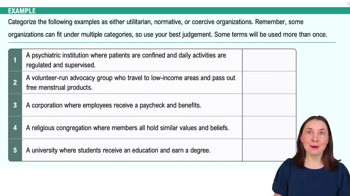
Utilitarian Organization
A group joined primarily for material or monetary rewards, such as paychecks, benefits, or formal credentials.
Normative Organization
A group joined voluntarily based on shared values, morals, or interests, often without financial compensation.
Coercive Organization
A group where membership is involuntary, often as punishment or treatment, such as prisons or mental hospitals.
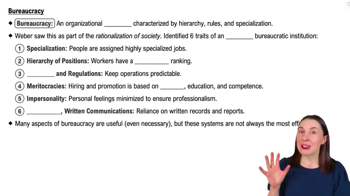
Bureaucracy
An organizational model designed to maximize efficiency through hierarchy, rules, and specialized roles.
Specialization
Assignment of highly specific tasks or roles to individuals, ensuring expertise and efficiency within an organization.
Hierarchy
A vertical ranking system where authority and power increase with position, often resembling a pyramid structure.
Rules and Regulations
Established guidelines that standardize procedures and ensure predictability and efficiency in organizational operations.
Meritocracy
A system where hiring and promotion are based solely on skills, education, and competence, not personal connections.
Impersonality
Minimization of personal feelings and emotions to ensure fairness and professionalism in organizational interactions.
Formal Communication
Reliance on written records and reports to document decisions and maintain organizational efficiency.
Rational-Legal Authority
Legitimacy of power derived from established laws and formal rules, rather than tradition or charisma.
Organizational Culture
Shared values, beliefs, and practices that shape the social environment within a group or institution.
Total Institution
A setting where individuals are isolated from society and controlled by an administrative staff, distinct from coercive groups.
 뒤로뒤로
뒤로뒤로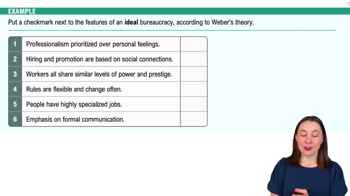
 01:31
01:31