Skip to main content
Introductory Statistics
나의 코스
배우기
시험 준비
AI 튜터
학습 가이드
교과서적 해결책
플래시카드
탐험해 보세요
앱을 사용해 보세요
나의 코스
배우기
시험 준비
AI 튜터
학습 가이드
교과서적 해결책
플래시카드
탐험해 보세요
앱을 사용해 보세요
뒤로
Frequency Distributions definitions
카드를 뒤집기 위해 탭할 수 있습니다.
Frequency Distribution
카드를 뒤집기 위해 탭할 수 있습니다.
👆
Frequency Distribution
A table organizing the count of measurements within specified groups, aiding in data visualization and analysis.
진행 상황 추적
컨트롤 버튼이 '내비게이션' 모드로 변경되었습니다.
1/15
관련 플래시카드
관련 실천
추천 영상
Frequency Distributions quiz #1
Frequency Distributions
40 용어
Frequency Distributions quiz #2
Frequency Distributions
16 용어
Frequency Distributions
2. Describing Data with Tables and Graphs
5 문제점
주제
Laura
Histograms
2. Describing Data with Tables and Graphs
5 문제점
주제
Brendan
2. Describing Data with Tables and Graphs - Part 1 of 2
5 주제
11 문제점
장
Brendan
2. Describing Data with Tables and Graphs - Part 2 of 2
5 주제
8 문제점
장
Jonathan
VideoThumbView.guidedCourse
06:19
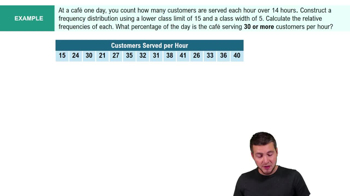
Intro to Frequency Distributions Example 1
7150
views
304
rank
6
comments
VideoThumbView.guidedCourse
06:29
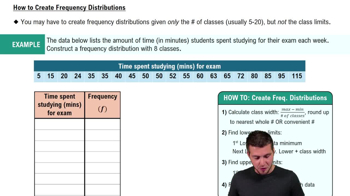
How to Create Frequency Distributions
6912
views
271
rank
1
comments
VideoThumbView.guidedCourse
06:38
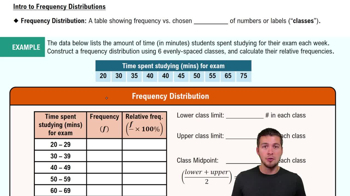
Intro to Frequency Distributions
14202
views
562
rank
9
comments
이 집합의 용어 (15)
하이드의 정의
Frequency Distribution
A table organizing the count of measurements within specified groups, aiding in data visualization and analysis.
Class
A group or interval of values used to categorize data in a frequency distribution, often defined by numerical ranges.
Lower Class Limit
The smallest value included in a class interval, typically found on the left side of the class range.
Upper Class Limit
The largest value included in a class interval, typically found on the right side of the class range.
Class Width
The difference between consecutive lower or upper class limits, determining the size of each class interval.
Class Midpoint
The average of the lower and upper class limits, representing the central value of a class interval.
Relative Frequency
A proportion or percentage showing how often a class occurs compared to the total number of measurements.
Tally
A counting method used to track occurrences within each class before finalizing frequencies.
Interval
A range of values defining the boundaries of a class, used to group data for frequency analysis.
Dataset
A collection of measurements or values subject to organization and analysis in frequency distributions.
Observation
An individual measurement or value within a dataset, counted in frequency calculations.
Percent
A unit expressing relative frequency as a portion out of 100, useful for comparing class frequencies.
Table
A structured arrangement of data, commonly used to display frequency distributions for clarity.
Range
The span between the minimum and maximum values in a dataset, used to determine class width.
Measurement
A recorded value in a dataset, forming the basis for frequency and relative frequency calculations.
 뒤로뒤로
뒤로뒤로
 06:19
06:19