Ch. 1 - Introduction to Statistics
Larson - Elementary Statistics: Picturing the World 8th Edition
Larson8th EditionElementary Statistics: Picturing the WorldISBN: 9780137493470당신이 사용하는 게 아니라요?교과서 변경
1장, 문제 1.2.5

Determine whether the statement is true or false. If it is false, rewrite it as a true statement.
More types of calculations can be performed with data at the nominal level than with data at the interval level.

검증된 단계별 안내
1
Understand the levels of measurement: Nominal data is the most basic level of measurement, where data is categorized without a natural order (e.g., colors, names). Interval data, on the other hand, is a higher level of measurement where the data is ordered, and the differences between values are meaningful (e.g., temperature in Celsius).
Recall the types of calculations that can be performed at each level: For nominal data, only basic operations like counting frequencies or determining the mode are possible. For interval data, more advanced calculations such as addition, subtraction, and finding the mean are possible because the differences between values are meaningful.
Compare the computational possibilities: Since interval data allows for more types of calculations than nominal data, the statement 'More types of calculations can be performed with data at the nominal level than with data at the interval level' is false.
Rewrite the statement to make it true: A true version of the statement would be 'More types of calculations can be performed with data at the interval level than with data at the nominal level.'
Conclude the reasoning: The original statement is false because nominal data is limited to basic categorical analysis, while interval data supports a broader range of mathematical operations.

비슷한 문제에 대한 검증된 영상 답변:

이 영상 해법은 위 문제에 도움이 된다고 튜터들이 추천한 것입니다.
영상 길이:
5m
도움이 되었나요?

주요 개념

질문에 올바르게 답하기 위해 반드시 이해해야 하는 핵심 개념들은 다음과 같습니다.

Nominal Level of Measurement

The nominal level of measurement is the most basic form of data classification, where data is categorized without any quantitative value. Examples include gender, race, or types of fruit. At this level, data can only be counted or categorized, and no mathematical operations can be performed.
추천 영상:
가이드 코스
10:28
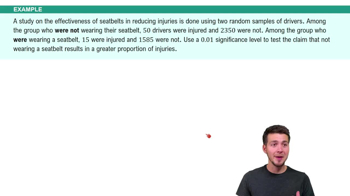
Difference in Proportions: Hypothesis Tests Example 1

Interval Level of Measurement

The interval level of measurement involves data that can be ordered and has meaningful differences between values, but lacks a true zero point. Examples include temperature in Celsius or IQ scores. This level allows for a wider range of statistical analyses, including addition and subtraction, making it more versatile than nominal data.
추천 영상:
가이드 코스
09:00
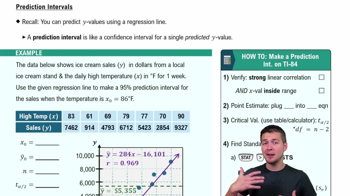
Prediction Intervals

Statistical Analysis Capabilities

Statistical analysis capabilities refer to the types of calculations and inferences that can be made based on the level of measurement of the data. Nominal data allows for basic counts and mode calculations, while interval data supports a broader range of analyses, including means, standard deviations, and correlation, enabling more complex insights.
추천 영상:
가이드 코스
05:53
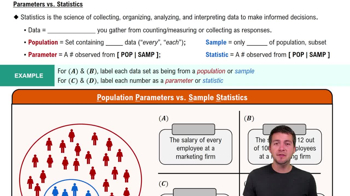
Parameters vs. Statistics