Skip to main content
Trigonometry
나의 코스
배우기
시험 준비
AI 튜터
학습 가이드
교과서적 해결책
플래시카드
탐험해 보세요
앱을 사용해 보세요
나의 코스
배우기
시험 준비
AI 튜터
학습 가이드
교과서적 해결책
플래시카드
탐험해 보세요
앱을 사용해 보세요
뒤로
Vectors in Component Form definitions
카드를 뒤집기 위해 탭할 수 있습니다.
Vector
카드를 뒤집기 위해 탭할 수 있습니다.
👆
Vector
Arrow-like quantity with direction and magnitude, often represented by numbers showing movement in space.
진행 상황 추적
컨트롤 버튼이 '내비게이션' 모드로 변경되었습니다.
1/15
관련 플래시카드
관련 실천
추천 영상
Vectors in Component Form quiz
Vectors in Component Form
15 용어
Vectors in Component Form
8. Vectors
3 문제점
주제
ErnestBlazevic
Direction of a Vector
8. Vectors
3 문제점
주제
ErnestBlazevic
8. Vectors
5 주제
11 문제점
장
Patrick
VideoThumbView.guidedCourse
02:26
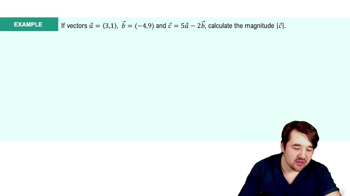
Finding Magnitude of a Vector Example 1
617
views
5
rank
VideoThumbView.guidedCourse
03:55
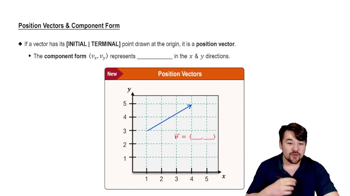
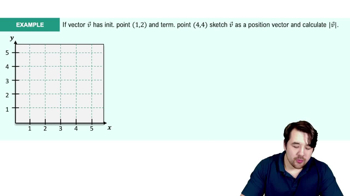
Position Vectors & Component Form
839
views
4
rank
VideoThumbView.guidedCourse
03:11
Algebraic Operations on Vectors Example 1
626
views
7
rank
이 집합의 용어 (15)
하이드의 정의
Vector
Arrow-like quantity with direction and magnitude, often represented by numbers showing movement in space.
Position Vector
Representation with initial point at the origin, showing movement from (0,0) to a specific location.
Component Form
Ordered pair indicating movement in x and y directions, written as (x, y) for clarity and calculation.
Initial Point
Starting location of a vector, used to determine direction and calculate components.
Terminal Point
Ending location of a vector, essential for finding component values and direction.
Magnitude
Numerical value representing the total length of a vector, calculated using its components.
Pythagorean Theorem
Formula relating the sides of a right triangle, used to compute vector length from components.
Resultant Vector
Outcome from combining two or more vectors, showing overall movement or effect.
Scalar
Single number used to scale a vector, affecting its length but not its direction.
Tip to Tail Method
Visual technique for combining vectors by connecting the end of one to the start of another.
x Component
Numerical value indicating movement along the horizontal axis in vector representation.
y Component
Numerical value indicating movement along the vertical axis in vector representation.
Vector Addition
Process of combining vectors by summing their corresponding components for a new vector.
Vector Subtraction
Process of finding the difference between vectors by subtracting their corresponding components.
Scalar Multiplication
Operation where each component of a vector is multiplied by a constant, changing its size.
 뒤로뒤로
뒤로뒤로

 02:26
02:26