Asymmetric Information: Adverse Selection and Moral Hazard quiz #1 Flashcards

Asymmetric Information: Adverse Selection and Moral Hazard quiz #1
Control buttons has been changed to "navigation" mode.
1/10
  • What is the market outcome when buyers possess more information than sellers in a transaction?
    When buyers have more information than sellers, it can lead to adverse selection, where sellers may be unable to distinguish between high-quality and low-quality buyers, potentially resulting in fewer transactions or lower prices.
  • What happens in a market transaction characterized by asymmetric information?
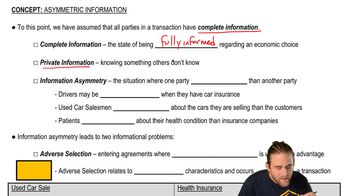
    In a market with asymmetric information, one party has more or better information than the other, which can lead to problems like adverse selection (before the transaction) or moral hazard (after the transaction), resulting in inefficient market outcomes.
  • Which of the following descriptions best exemplifies adverse selection?
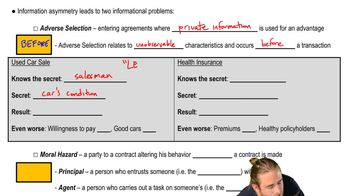
    Adverse selection is exemplified by situations where one party uses private information before a transaction, such as a used car salesman knowing about hidden defects in a car that the buyer cannot observe.
  • Which of the following is an example of moral hazard?
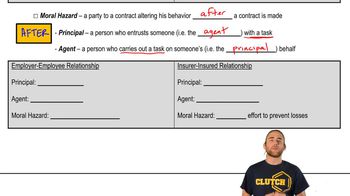
    An example of moral hazard is when an insured driver takes more risks after obtaining car insurance, knowing that losses will be covered by the insurer.
  • Which of the following is considered to be a moral hazard?
    A moral hazard occurs when an employee reduces their work effort after being hired, changing their behavior after the employment contract is signed.
  • What is meant by 'private information' in the context of economic transactions?
    Private information refers to knowledge that one party has which is not known to the other party in a transaction, leading to information asymmetry.
  • How does the 'lemon problem' in the used car market illustrate adverse selection?
    The 'lemon problem' occurs when buyers cannot distinguish between good and bad cars due to hidden information, causing them to lower their willingness to pay and resulting in fewer good cars being sold.
  • Why do health insurance premiums tend to rise in markets affected by adverse selection?
    Premiums rise because insurers face higher claims from riskier individuals who withheld information about their health, prompting healthy individuals to drop out and worsening the risk pool.
  • In the principal-agent relationship, who is typically the principal and who is the agent in an employment contract?
    The employer is the principal who entrusts the employee (the agent) with tasks to perform on their behalf.
  • How does moral hazard affect the behavior of insured individuals after obtaining insurance?
    Insured individuals may take more risks or exert less effort to prevent losses because they know the insurer will cover potential damages, altering their behavior after the contract is made.