Pearson+ LogoPearson+ Logo
Back

Consumer Surplus and Willingness to Pay quiz #6

Control buttons has been changed to "navigation" mode.
1/40
  • What advantage is there for a company to offer products at prices below actual market value?

    To attract customers and increase market share.
  • Which of the following is a type of consumer decision making discussed in your text?

    Routine, limited, and extended decision making.
  • Jackson has a limited budget and needs to replace the flooring. Which option would cost the least?

    Choosing the flooring with the lowest price per square foot.
  • The additional satisfaction of consuming a good or service is called what?

    Marginal utility.
  • A __________ is what customers expect they will get by purchasing a product.

    Benefit or value.
  • Market segmentation is about dividing the market into __________ groups.

    Similar or homogeneous.
  • High quality products marketed to high-income individuals are an example of what?

    Market segmentation based on income.
  • A similar group of consumers responding to the same marketing mix is called what?

    A market segment.
  • Marketers look at sales invoices to see what customers are buying. Why?

    To understand consumer preferences and demand patterns.
  • The number of different people or households exposed to an advertisement is referred to as what?

    Reach.
  • The market orientation approach emphasizes what?

    Meeting the needs and wants of consumers.
  • The bargaining power of buyers depends on what?

    The availability of alternatives and the importance of each buyer to the seller.
  • The specific sequence of steps consumers follow to make a purchase is called what?

    The consumer decision-making process.
  • ____ emphasizes how goods or services will satisfy consumers’ wants and needs.

    Marketing.
  • The number of times a consumer is exposed to a message is called what?

    Frequency.
  • To develop psychographic segments, the marketer must understand consumers' what?

    Lifestyles, values, and interests.
  • A new product often has a high price when it is launched because of a what?

    Price skimming strategy.
  • Average number of times a customer is exposed to a message is called what?

    Frequency.
  • In the marketplace, what is a rough measure of how society values certain goods and services?

    Market price.
  • In an efficient market, firms should expect to receive what value for securities they sell?

    Fair market value.
  • Buyers are in position to exert strong bargaining power in dealing with sellers when what?

    There are many alternative sellers or products.
  • A firm will purchase a resource if:

    The marginal benefit exceeds the marginal cost.
  • The first group to adopt new products are called _______.

    Innovators.
  • The highest price customers are willing to pay is called the price what?

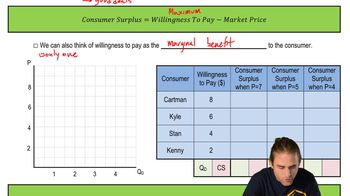
    Reservation price or maximum willingness to pay.
  • As people make more money, their spending behavior changes. This is known as what?

    The income effect.
  • When you compare prices for new tires, how are you using money in this case?

    As a measure of value.
  • Consumption includes purchases made by _________.

    Households and individuals.
  • A price reduction might just mean that a product was overpriced before it was discounted. True or false?

    True.
  • Customers associate high prices with low quality. True or false?

    False; they often associate high prices with high quality.
  • The greater the discrepancy between a consumer's needy state and the desired state, the greater the what?

    Motivation to purchase.
  • A firm with a sales objective will set prices at a level that generates more what?

    Sales volume.
  • The most a consumer is willing to pay for a product is equivalent to the product's what?

    Reservation price or maximum willingness to pay.
  • Consumers are diverse with distinct needs and wants, resulting in what?

    Market segmentation.
  • Which of the following is the main incentive for a manufacturer to sell a product?

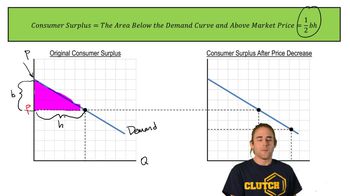
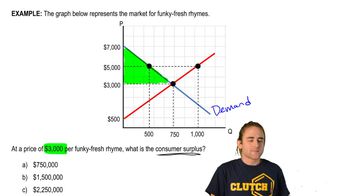
    To earn profit by capturing consumer surplus.
  • The characteristics of a product that make it superior to competitive substitutes are called what?

    Differentiating features or unique selling propositions.
  • A successful business strategy creates what for both producers and consumers?

    Value.
  • Customers who purchase goods and services for their own use are called what?

    Consumers.
  • Which of these refers to the influence that consumer purchasing demand has on business purchasing?

    Derived demand.
  • Which of the following best describes the purpose of customer insights?

    To understand consumer needs and improve offerings.
  • Which type of product is usually purchased on the spur of the moment?

    Impulse product.