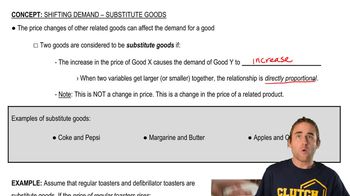
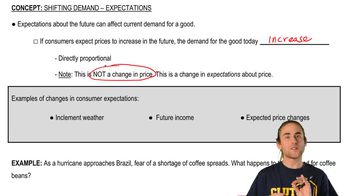
A shift in the demand curve is caused by changes in non-price determinants such as consumer income, prices of related goods, consumer preferences, expectations about future prices, and the number of consumers.
How do consumer expectations affect demand?
Consumer expectations about future prices or income can increase current demand if they expect higher prices or income in the future, or decrease current demand if they expect lower prices or income.
How do consumer expectations affect the demand for a product?
If consumers expect the price of a product to increase in the future, they are likely to buy more now, increasing current demand.
What is a likely reason for an increase in demand for a product?
An increase in consumer income (for normal goods), a rise in the price of a substitute, increased consumer preference, positive expectations about future prices, or an increase in the number of consumers can all increase demand.
How can you tell if the market demand for a product has increased?
Market demand has increased if, at every price, a greater quantity is demanded than before, indicating a rightward shift of the demand curve.
What are some determinants of demand?
Determinants of demand include consumer income, prices of related goods, consumer preferences, consumer expectations, and the number of consumers.
What factors can cause a shift in the demand curve?
Factors include changes in consumer income, prices of substitutes or complements, consumer preferences, expectations about future prices, and the number of consumers.
Which factors influence changes in consumer demand?
Changes in consumer income, prices of related goods, consumer preferences, expectations about future prices, and the number of consumers influence demand.
What is a reason that consumer demand can change?
Consumer demand can change due to shifts in income, changes in preferences, prices of related goods, expectations about the future, or changes in the number of consumers.
What are the factors that shift the demand curve?
The demand curve shifts due to changes in consumer income, prices of substitutes and complements, consumer preferences, expectations about future prices, and the number of consumers.
What can cause an entire demand curve to shift?
A change in any non-price determinant of demand, such as income, preferences, prices of related goods, expectations, or number of consumers, can shift the entire demand curve.
What would cause the demand curve to shift?
A shift occurs when there is a change in consumer income, preferences, prices of related goods, expectations about the future, or the number of consumers.
What factors change demand?
Demand changes due to consumer income, prices of substitutes and complements, consumer preferences, expectations about future prices, and the number of consumers.
How do substitutes affect demand?
If the price of a substitute good rises, the demand for the related good increases, and if the price of a substitute falls, the demand for the related good decreases.
How does the number of consumers affect demand?
An increase in the number of consumers increases demand, while a decrease in the number of consumers decreases demand.
How do consumer tastes affect demand?
If consumer preferences shift in favor of a good, demand increases; if preferences shift away, demand decreases.
How does the demand curve shift?
The demand curve shifts right when demand increases due to positive changes in determinants, and shifts left when demand decreases due to negative changes.
Which strategies can reduce demand for new lumber?
Strategies that reduce demand for new lumber include promoting substitutes, changing consumer preferences, or reducing the number of consumers.
How do non-price determinants affect demand?
Non-price determinants such as income, preferences, prices of related goods, expectations, and number of consumers shift the entire demand curve, increasing or decreasing demand at every price.
How is future price related to current demand?
If consumers expect future prices to rise, current demand increases; if they expect prices to fall, current demand decreases.
How do complementary goods affect demand?
If the price of a complementary good rises, the demand for the related good decreases; if the price of a complement falls, demand increases.
What is the difference between a movement along the demand curve and a shift of the demand curve?
A movement along the demand curve is caused by a change in the good's own price, while a shift of the demand curve is caused by changes in non-price determinants.
How does consumer income affect demand for normal and inferior goods?
An increase in income increases demand for normal goods and decreases demand for inferior goods; a decrease in income has the opposite effect.
What is the effect of advertising on demand?
Advertising can increase demand by attracting new consumers or increasing consumer preference for a product.
What is a directly proportional determinant of demand?
A directly proportional determinant is one where an increase in the determinant (like income for normal goods or the price of a substitute) increases demand.
What is an inversely proportional determinant of demand?
An inversely proportional determinant is one where an increase in the determinant (like income for inferior goods or the price of a complement) decreases demand.
How do changes in consumer preferences affect the demand curve?
If preferences shift in favor of a good, the demand curve shifts right; if preferences shift away, the curve shifts left.
What happens to demand if the price of a substitute increases?
The demand for the related good increases.
What happens to demand if the price of a complement increases?
The demand for the related good decreases.
What happens to demand if consumer income increases for a normal good?
Demand for the normal good increases.
What happens to demand if consumer income increases for an inferior good?
Demand for the inferior good decreases.
What is the effect of a decrease in the number of consumers on demand?
A decrease in the number of consumers decreases demand.
How do non-price determinants differ from price in affecting demand?
Non-price determinants shift the entire demand curve, while price changes cause movement along the curve.
What is the effect of consumer expectations about future income on current demand?
If consumers expect higher future income, current demand may increase as they feel more confident in spending.
 Back
Back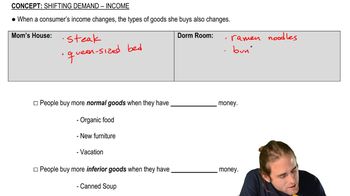
 01:48
01:48