Pearson+ LogoPearson+ Logo

Shifts in the Supply Curve quiz #1 Flashcards

Back
Shifts in the Supply Curve quiz #1
Control buttons has been changed to "navigation" mode.
1/37
  • Which of the following will NOT shift a supply curve?

    A change in the price of the product itself will not shift the supply curve; it only changes the quantity supplied.
  • Which factor does NOT shift the supply curve?

    A change in the product's own price does not shift the supply curve.
  • Which of the following will shift the supply curve for apples to the right?

    A decrease in the cost of inputs used to grow apples, such as fertilizer, will shift the supply curve to the right.
  • Refer to the accompanying graph. Which event would cause the supply curve to shift to the right?

    An improvement in technology that makes production more efficient would shift the supply curve to the right.
  • Which of the following would shift the supply of Green Bay Packers football jerseys to the left?

    An increase in the cost of materials used to make the jerseys would shift the supply curve to the left.
  • Which is most likely to shift the supply curve for pet grooming services leftward?

    An increase in wages for pet groomers would shift the supply curve for pet grooming services to the left.
  • Which would most likely shift the aggregate supply curve? A change in the prices of:

    A change in the prices of inputs, such as labor or raw materials, would most likely shift the aggregate supply curve.
  • Which of these corresponds to a shift in the supply curve?

    A change in technology that makes production more efficient corresponds to a shift in the supply curve.
  • Which factor is most likely to shift the supply curve for milk to the left?

    An increase in the price of feed for dairy cows is most likely to shift the supply curve for milk to the left.
  • Which of the following events would shift a supply curve to the left?

    A new tax imposed on producers would shift the supply curve to the left.
  • Which of the following events would shift the supply of smartphones to the right?

    A decrease in the price of microchips used in smartphones would shift the supply curve to the right.
  • Which of the following would cause a leftward shift in the supply curve for car washes?

    An increase in the cost of water or cleaning supplies would cause a leftward shift in the supply curve for car washes.
  • A shift in the supply curve at every price is the result of a change in:

    A shift in the supply curve at every price is the result of a change in factors other than the product's own price, such as input costs, technology, or number of suppliers.
  • If the cost of production of hula hoops increases, the supply curve will:

    Shift to the left, indicating a decrease in supply.
  • Choose all of the following that will cause a change in supply, not quantity supplied.

    Changes in input prices, technology, taxes or subsidies, number of suppliers, producer expectations, and natural events will cause a change in supply.
  • Which of the following will shift a supply curve?

    A change in the cost of production inputs will shift a supply curve.
  • Select the graph that corresponds to a shift in the supply curve.

    The graph where the entire supply curve moves rightward or leftward at every price, rather than movement along the curve.
  • Indicate whether each scenario involves a shift in the supply curve.

    A scenario involves a shift in the supply curve if it is caused by changes in input costs, technology, taxes/subsidies, number of suppliers, expectations, or natural events, not by a change in the product's own price.
  • When economists say that the supply for a product has decreased, they mean that the:

    Supply curve has shifted to the left, resulting in a lower quantity supplied at every price.
  • A decrease in supply is depicted by a:

    Leftward shift of the supply curve.
  • An increase in price of inputs would be represented by a change from:

    A rightward supply curve to a leftward supply curve, indicating a decrease in supply.
  • When the supply curve shifts to the right or left:

    The quantity supplied changes at every price due to factors other than the product's own price.
  • What factors can cause a shift in the supply curve?

    Factors that can shift the supply curve include changes in input costs, technological advancements, taxes and subsidies, prices of substitutes in production, producer expectations about future prices, the number of suppliers, and natural events such as weather.
  • What does a decrease in supply mean in terms of the supply curve?

    A decrease in supply means the supply curve shifts to the left, indicating that at every price, a smaller quantity is supplied.
  • How do input costs affect the supply of a good?

    If input costs increase, supply decreases (shifts left); if input costs decrease, supply increases (shifts right).
  • Which of the following is not a determinant of supply: input costs, consumer income, technology, or taxes?

    Consumer income is not a determinant of supply; input costs, technology, and taxes are determinants of supply.
  • How do technological advancements affect the supply curve?

    Technological advancements generally increase supply by making production more efficient, shifting the supply curve to the right.
  • How do taxes and subsidies affect supply?

    Taxes increase production costs and decrease supply, while subsidies decrease costs and increase supply.
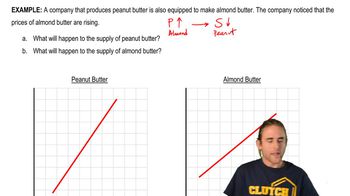
  • How do prices of substitutes in production affect supply?

    If the price of a substitute in production increases, the supply of the original product decreases as producers switch to the more profitable substitute.
  • How do producer expectations about future prices affect current supply?

    If producers expect higher future prices, current supply may decrease as they withhold goods to sell later; if they expect lower future prices, current supply may increase.
  • How does the number of suppliers in a market affect supply?

    An increase in the number of suppliers increases supply, shifting the supply curve to the right.
  • What are non-price determinants of supply?

    Non-price determinants of supply include input costs, technology, taxes and subsidies, prices of related goods in production, producer expectations, number of suppliers, and natural events.
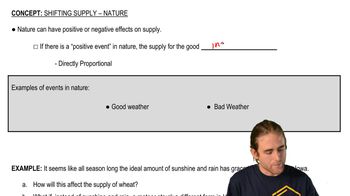
  • How can weather act as a supply shifter?

    Good weather can increase supply by improving production conditions, while bad weather can decrease supply by harming production.
  • What happens to supply if the price of a key input, like microchips for computers, decreases?

    If the price of a key input decreases, supply increases because production becomes less costly.
  • What is meant by a shift to the right in the supply curve?

    A shift to the right in the supply curve means an increase in supply, so more is supplied at every price.
  • What is a determinant of supply?

    A determinant of supply is any factor other than the product's own price that causes the supply curve to shift, such as input costs, technology, taxes, subsidies, prices of related goods, expectations, number of suppliers, or natural events.
  • Which events would reduce the supply of a product like microcomputers?

    Events that would reduce the supply of microcomputers include an increase in input costs (like higher microchip prices), higher taxes, negative natural events, or a decrease in the number of suppliers.