Three sources of comparative advantage are climate, differences in domestic factors of production (such as natural resources, labor, and capital), and differences in technology.
What are some sources of comparative advantage?
All three—climate, technology, and external economies—are sources of comparative advantage.
How does climate contribute to a country's comparative advantage in agriculture?
Climate determines which crops grow best in a region, giving countries like Costa Rica an advantage in bananas and the UK in strawberries.
Why does Canada have a comparative advantage in lumber production compared to Iraq?
Canada's abundant forests provide the necessary natural resources for lumber production, while Iraq has few forests.
How do differences in labor between the US and China affect their comparative advantages?
China's large population of unskilled workers favors mass production of simple goods, while the US's specialized labor supports innovation and creative industries.
In what way does Japan use technology to gain a comparative advantage?
Japan excels at optimizing existing production processes, making products cheaper and more efficient.
What role do external economies play in creating comparative advantage for certain regions?
External economies arise when industries cluster in specific locations, attracting talent and resources, such as Hollywood for movies or London for finance.
Why might someone seeking a career in film choose to move to Southern California?
Southern California is a hub for the movie industry, offering more opportunities and resources for actors and filmmakers.
How do domestic factors of production influence a country's ability to produce certain goods?
The availability of resources like natural materials, labor, and capital determines which goods a country can produce efficiently.
What is the impact of geographical location on the development of industry clusters?
Geographical location can lead to the concentration of industries, which attracts skilled workers and specialized services, reinforcing comparative advantage.
 Back
Back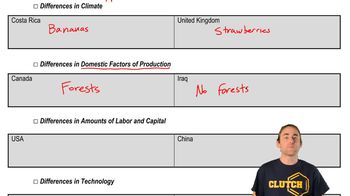
 06:08
06:08