How does the rate of a proportional tax change as income increases?
In a proportional tax system, the tax rate remains constant as income increases; everyone pays the same percentage of their income in taxes regardless of how much they earn.
In what kind of tax system does the average tax rate rise as GDP (or income) increases?
The average tax rate rises with income in a progressive tax system, where higher income levels are taxed at higher rates.
If tax rates are decreasing as income increases, what type of tax system is this?
If tax rates decrease as income increases, this is a regressive tax system, where higher-income individuals pay a lower percentage of their income in taxes compared to lower-income individuals.
What is deadweight loss in the context of tax efficiency?
Deadweight loss refers to the reduction in trade and economic activity caused by taxes, which prevent some mutually beneficial transactions from occurring.
How does administrative burden affect the efficiency of a tax system?
Administrative burden uses up resources for tax compliance and enforcement, making the tax system less efficient due to wasted time and money.
What is the formula for calculating the average tax rate?
The average tax rate is calculated by dividing the total taxes paid by the total income earned.
How is the marginal tax rate determined in a tiered tax system?
The marginal tax rate is the percentage of tax paid on the next dollar of income, which depends on the tax bracket the additional income falls into.
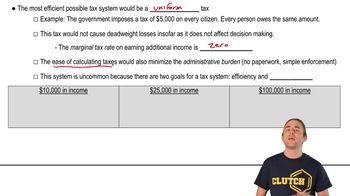
Why is a uniform tax system considered efficient in terms of administrative burden?
A uniform tax system is efficient because it simplifies tax calculations and enforcement, eliminating complex paperwork and reducing compliance costs.
What is a major drawback of a uniform tax system regarding fairness?
A uniform tax system can be unfair because it places a heavier burden on lower-income individuals, who pay a larger percentage of their income in taxes.
Why might a uniform tax system result in a marginal tax rate of zero?
In a uniform tax system, earning additional income does not increase the amount of tax owed, so the marginal tax rate is zero.
 Back
Back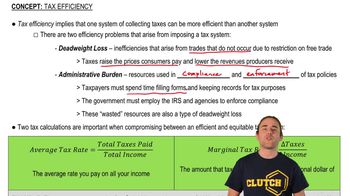
 06:43
06:43