Skip to main content
Personal Health
My Course
Learn
Exam Prep
AI Tutor
Study Guides
Flashcards
Try the app
My Course
Learn
Exam Prep
AI Tutor
Study Guides
Flashcards
Try the app
Back
Drug Effects on the Body definitions
You can tap to flip the card.
Addiction
You can tap to flip the card.
👆
Addiction
A disease marked by compulsive substance use, driven by brain circuits that reinforce pleasure and reward, making behaviors difficult to control.
Track progress
Control buttons has been changed to "navigation" mode.
1/15
Related flashcards
Related practice
Recommended videos
Drug Effects on the Body quiz
Drug Effects on the Body
20 Terms
Drug Effects on the Body
Ch.9 Drugs
5 problems
Topic
Laura
Drug Categories
Ch.9 Drugs
5 problems
Topic
Nicole
Ch.9 Drugs
5 topics
13 problems
Chapter
Laura
Guided course
1:33
Factors Affecting Drug Action Example 3
69
views
1
rank
Guided course
3:56
How Drugs Affect the Brain Concept 2
79
views
2
rank
Guided course
3:21
The Pleasure and Reward Circuit Concept 1
96
views
2
rank
Terms in this set (15)
Hide definitions
Addiction
A disease marked by compulsive substance use, driven by brain circuits that reinforce pleasure and reward, making behaviors difficult to control.
Dopamine
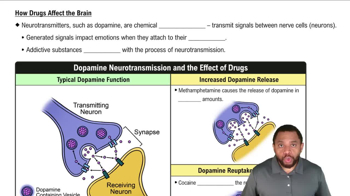
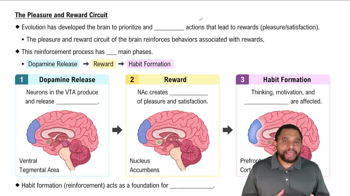
A chemical messenger released by neurons, central to pleasure and reward, and heavily involved in reinforcing behaviors linked to addiction.
Neurotransmitter
A chemical that transmits signals between nerve cells, influencing emotions and behavior, and affected by many drugs.
Ventral Tegmental Area
A brain region responsible for producing and releasing dopamine, initiating the pleasure and reward process.
Nucleus Accumbens
A brain structure that generates feelings of pleasure and satisfaction, reinforcing rewarding behaviors.
Prefrontal Cortex
A brain area involved in motivation, thinking, and behavior, playing a key role in habit formation and decision-making.
Synapse
The gap between neurons where chemical messengers like dopamine are transmitted, crucial for signal communication.
Receptor
A protein on a neuron that receives chemical signals, allowing neurotransmitters to impact emotions and behavior.
Vesicle
A small structure within neurons that stores and releases neurotransmitters such as dopamine during signal transmission.
Uptake Pump
A cellular mechanism that returns neurotransmitters like dopamine to their storage vesicles, regulating their effects.
Dosage
The amount of a drug taken, which determines the intensity of its effects on the body.
Body Composition
The ratio of muscle, fat, bone, and tissues in the body, influencing drug concentration and effects.
Biochemistry
The rate of metabolism and chemical processes in the body, affecting how long and how strongly a drug acts.
Route of Administration
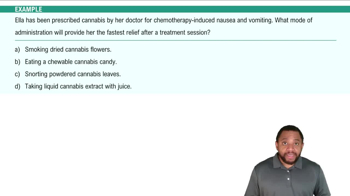
The method by which a drug enters the body, impacting how quickly and intensely it takes effect.
Habit Formation
A process where repeated behaviors become automatic, often reinforced by pleasure and reward circuits in the brain.
 BackBack

 1:33
1:33