Skip to main content
Personal Health
My Course
Learn
Exam Prep
AI Tutor
Study Guides
Flashcards
Try the app
My Course
Learn
Exam Prep
AI Tutor
Study Guides
Flashcards
Try the app
Back
Drug Interactions definitions
You can tap to flip the card.
Drug Interactions
You can tap to flip the card.
👆
Drug Interactions
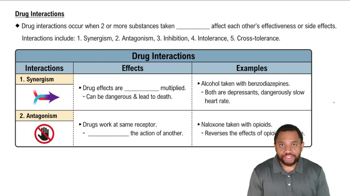
Alterations in effectiveness or side effects when multiple substances are taken together, resulting in amplified or diminished outcomes.
Track progress
Control buttons has been changed to "navigation" mode.
1/15
Related flashcards
Related practice
Recommended videos
Drug Interactions quiz
Drug Interactions
20 Terms
Drug Interactions
Ch.9 Drugs
2 problems
Topic
Laura
Treatment and Recovery
Ch.9 Drugs
5 problems
Topic
Laura
Ch.9 Drugs
5 topics
13 problems
Chapter
Laura
Guided course
1:13
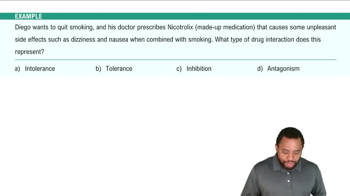
Drug Interactions Example 1
79
views
Guided course
2:32
Drug Interactions Concept 1
74
views
2
rank
Guided course
2:03
Drug Interactions Concept 2
78
views
1
rank
Terms in this set (15)
Hide definitions
Drug Interactions
Alterations in effectiveness or side effects when multiple substances are taken together, resulting in amplified or diminished outcomes.
Synergism
Combined substances produce effects greater than the sum of their individual actions, often increasing risk of severe outcomes.
Antagonism
One substance blocks or competes for the same receptor as another, reducing or reversing its effects.
Inhibition
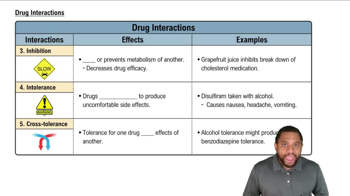
A substance slows or prevents the metabolism of another, decreasing its intended efficacy or increasing side effects.
Intolerance
Combination of substances leads to uncomfortable or unpleasant side effects, sometimes used therapeutically to discourage use.
Cross Tolerance
Tolerance to one substance reduces the effects of another, often within the same drug class.
Receptor
A cellular structure where substances bind, influencing physiological responses and drug effectiveness.
Metabolism
The body's process of breaking down substances, affecting how drugs are activated or eliminated.
Side Effects
Unintended reactions or symptoms caused by substances, which may be amplified or reduced by interactions.
Depressants
Substances that slow down central nervous system activity, often leading to decreased heart rate and breathing.
Naloxone
A substance used to reverse opioid overdose by competing for and occupying opioid receptors.
Opioids
A class of substances that act on specific receptors to relieve pain but can cause overdose if misused.
Benzodiazepines
A group of depressants often prescribed for anxiety or sleep, which can be dangerous when combined with other depressants.
Disulfiram
A substance that produces unpleasant reactions when combined with alcohol, used to discourage drinking.
Cholesterol Medication
Drugs prescribed to manage cholesterol levels, whose effectiveness can be reduced by certain food or drink interactions.
 BackBack
 1:13
1:13