Pearson+ LogoPearson+ Logo

Health Effects of Stress quiz #1 Flashcards

Back
Health Effects of Stress quiz #1
Control buttons has been changed to "navigation" mode.
1/10
  • What is a major side effect that stress can cause on the gastrointestinal system?

    A major side effect that stress can cause on the gastrointestinal system is gastrointestinal problems.
  • Do emotional signs of stress include physical symptoms such as aches and nausea?

    Yes, emotional signs of stress can include physical symptoms such as aches and nausea.
  • Elevated levels of stress hormones most clearly contribute to developing which types of health problems?

    Elevated levels of stress hormones most clearly contribute to developing conditions such as cardiovascular disease, diabetes, gastrointestinal issues, impaired immunity, and weight gain.
  • Which two basic needs are affected by secondary traumatic stress?

    Secondary traumatic stress can affect both emotional and physical needs, impacting overall well-being.
  • What is another term for caregiver stress?

    Caregiver stress is also known as secondary traumatic stress.
  • What are some examples of psychosomatic responses to stress?

    Psychosomatic responses to stress can include headaches, gastrointestinal problems, sleep disruption, and hair loss.
  • Does stress have an effect on every system of the body?

    Yes, stress has an effect on every system of the body, impacting physical, mental, and social health.
  • What are common symptoms of long-term stress?

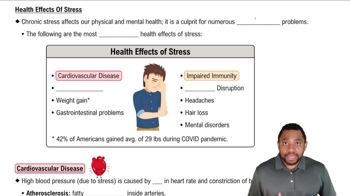
    Common symptoms of long-term stress include cardiovascular disease, diabetes, weight gain, gastrointestinal problems, impaired immunity, sleep disruption, headaches, and hair loss.
  • What are some signs of negative stress?

    Signs of negative stress include sleep disruption, headaches, gastrointestinal problems, weight gain, impaired immunity, and increased risk of chronic diseases.
  • How does chronic stress affect the immune system?

    Chronic stress weakens the immune system by reducing white blood cell counts, making the body more susceptible to illnesses.