What is mindfulness in the context of stress management?
Mindfulness is being present and aware by focusing on your thoughts, emotions, and surroundings to better understand and manage stressors.
How can journaling help with stress management?
Journaling allows you to assess and identify your stressors, which helps you understand what triggers your stress.
Why is self-compassion important in managing stress?
Practicing self-compassion and positive self-talk prepares you to better cope with stress and improves your overall well-being.
What is the recommended way to express anger when stressed?
Express anger assertively using 'I' statements rather than aggressive or suppressive methods, which is healthier for stress management.
What can happen if you suppress anger or stress?
Suppressing anger or stress can impact you internally and may eventually lead to an emotional outburst.
Why is a support system important for managing stress?
A support system provides emotional support and helps buffer the effects of stress through shared experiences and meaningful relationships.
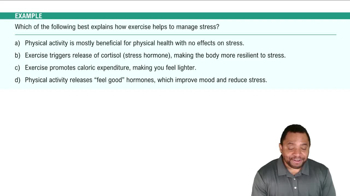
How does exercise help in managing stress?
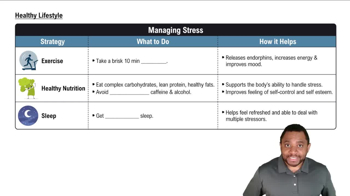
Exercise, such as a brisk ten-minute walk, releases endorphins that increase energy and improve mood, helping to reduce stress.
What types of foods are recommended for stress management?
Eating complex carbohydrates, lean proteins, and healthy fats can help you feel more energized and less lethargic, improving your ability to handle stress.
Why should you avoid excessive caffeine and alcohol when stressed?
Too much caffeine can make you jittery and impulsive, while excessive alcohol can impair judgment and lower self-esteem.
How does adequate sleep contribute to stress management?
Getting enough sleep helps you feel refreshed and better able to deal with multiple stressors throughout the day.
What is the role of discipline in managing stress?
Discipline, especially in time management, helps you cope with everyday stressors and makes time for self-care.
How can time management reduce stress?
Scheduling time, prioritizing tasks, and focusing on one task at a time can help reduce overall stress and improve productivity.
What are some relaxation techniques mentioned for stress management?
Relaxation techniques include meditation, yoga, Tai Chi, and biofeedback.
What is Tai Chi and how does it help with stress?
Tai Chi is a martial art that incorporates deep breathing and mindfulness, which helps lower stress levels.
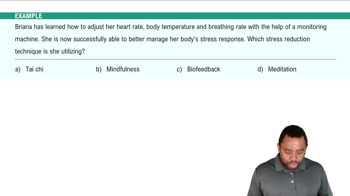
What is biofeedback in the context of stress management?
Biofeedback involves using devices to monitor physiological functions, helping you adjust and lower your stress by tracking your body's responses.
How does a clean work area contribute to stress management?
Keeping your work area clean helps you focus better and reduces everyday stressors.
Why is focusing on one task at a time beneficial for stress?
Focusing on one task at a time prevents overwhelm and helps you manage stress more effectively.
How does a healthy lifestyle support stress management?
A healthy lifestyle, including exercise, good nutrition, and sleep, supports your ability to handle stress and improves self-control and self-esteem.
What is the connection between nutrition and stress?
Eating healthful foods can make you feel more energized and better able to cope with stress, while junk food can make you feel worse.
How can building a supportive social network help with stress?
A supportive social network provides emotional support and helps you share and manage stress through collective coping strategies.
 Back
Back

 1:34
1:34