Pearson+ LogoPearson+ Logo

Managing Weight quiz #1 Flashcards

Back
Managing Weight quiz #1
Control buttons has been changed to "navigation" mode.
1/10
  • Are rubber suits effective for increasing weight loss during an exercise program, and what is the recommended approach for healthy weight management?

    Rubber suits are not recommended for increasing weight loss during exercise, as they primarily cause temporary water loss through sweating rather than true fat loss. Healthy weight management is best achieved by balancing calorie intake with physical activity, following the energy balance equation, and adopting sustainable diet and exercise habits.
  • What is the energy balance equation used to determine changes in body weight?

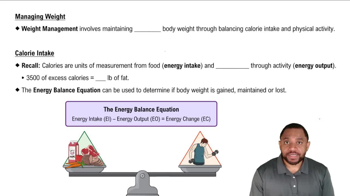
    The energy balance equation is energy intake (EI) minus energy output (EO) equals energy change (EC). A positive EC leads to weight gain, while a negative EC results in weight loss.
  • How many excess calories are equivalent to gaining one pound of fat?

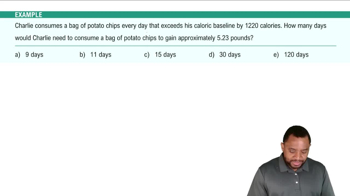
    An excess of 3,500 calories is equivalent to gaining one pound of fat. This means consuming 3,500 more calories than you expend will result in about one pound of weight gain.
  • What role does lean muscle tissue play in calorie burning compared to fat tissue?

    Lean muscle tissue is more metabolically active and burns more daily calories than fat tissue. Increasing muscle mass can therefore enhance overall calorie expenditure.
  • What are the three main factors that influence calorie expenditure during physical activity?

    The three main factors are the number of muscles used, the resistance or weight moved, and the duration of the activity. Engaging more muscles, increasing resistance, and working out longer all increase calories burned.
  • Why can excessively long workouts be detrimental to weight management?

    Excessively long workouts can lead to muscle tissue degradation and increase the risk of injuries. There is a point where the negative effects outweigh the benefits of burning more calories.
  • What is the primary focus of the Mediterranean diet for weight management?

    The Mediterranean diet is primarily plant-based, focusing on fruits, vegetables, fish, grains, nuts, and oils. It allows moderate amounts of poultry, eggs, and dairy.
  • What does the DASH diet aim to prevent, and what foods does it recommend limiting?

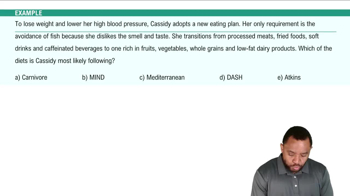
    The DASH diet aims to prevent hypertension (high blood pressure). It recommends limiting sweets, saturated fats, red meat, and sodium.
  • How does the flexitarian diet differ from a strict vegetarian diet?

    The flexitarian diet is mostly plant-based but allows limited consumption of fish and meats. This makes it less restrictive than a strict vegetarian diet.
  • What is the MIND diet, and what is its purpose?

    The MIND diet combines elements of the Mediterranean and DASH diets. Its purpose is to help delay neurodegenerative diseases.