Bacteria are single-celled microorganisms found both inside and outside the body.
What does it mean if a bacterium is pathogenic?
A pathogenic bacterium is one that causes disease.
How are bacteria classified based on their shape?
Bacteria are classified as cocci (round), bacilli (rod-shaped), or spirilla (spiral).
What is the main purpose of antibiotics?
Antibiotics are medications used to kill pathogenic bacteria.
What is antibiotic resistance?
Antibiotic resistance occurs when bacteria evolve so that antibiotics are no longer effective against them.
How do pathogenic bacteria cause disease?
They cause disease by invading tissues and/or producing toxins that damage cells.
What is colonization in the context of bacteria?
Colonization is when bacteria establish themselves in or on a host without causing illness.
What are the symptoms and transmission method of MRSA?
MRSA causes red bumps, skin infections, and inflammation, and is transmitted by skin-to-skin contact or contact with contaminated surfaces.
How is strep throat transmitted and what are its symptoms?
Strep throat is transmitted through respiratory droplets and causes sore throat, white patches on tonsils, fever, headache, and swollen lymph nodes.
What are the main symptoms of bacterial meningitis?
Symptoms include inflammation of the membranes covering the brain and spinal cord, fever, severe headache, and stiff neck.
How is pneumonia caused and transmitted?
Pneumonia can be caused by bacteria, viruses, fungi, or chemicals and is transmitted through respiratory droplets or contact with contaminated surfaces.
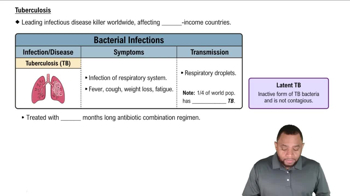
What is tuberculosis and how is it transmitted?
Tuberculosis is a leading infectious disease that affects the lungs and is transmitted through respiratory droplets.
What are the symptoms of tuberculosis?
Symptoms include fever, cough, weight loss, and fatigue.
What is latent tuberculosis?
Latent tuberculosis is an inactive form of the bacteria that is not contagious.
How is tuberculosis treated?
It is treated with a combination of antibiotics over six to nine months.
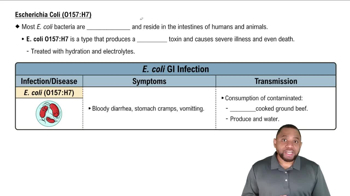
Are all E. coli bacteria harmful?
No, most E. coli are harmless and part of the gut microbiome, but some strains can cause severe illness.
How is the harmful strain of E. coli (O157:H7) transmitted?
It is transmitted by consuming contaminated or undercooked ground beef, produce, or water.
What are the symptoms of E. coli O157:H7 infection?
Symptoms include bloody diarrhea, stomach cramps, and vomiting.
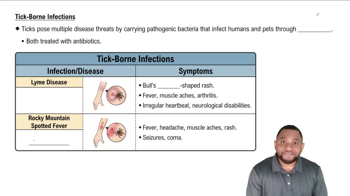
What are the two most common tick-borne bacterial infections?
The two most common are Lyme disease and Rocky Mountain Spotted Fever (Rickettsia).
How can you recognize Lyme disease and how is it treated?
Lyme disease often presents with a bull's eye rash, fever, muscle aches, and is treated with antibiotics.