Psychological disorders are conditions that significantly disturb an individual's cognition, emotions, or behavior, often disrupting daily functioning.
What percentage of college students experience serious psychological distress?
Approximately 19.5% of college students experience serious psychological distress.
Which group is at higher risk for mental illness among college students?
LGBTQIA+ individuals tend to have higher risks of mental illness.
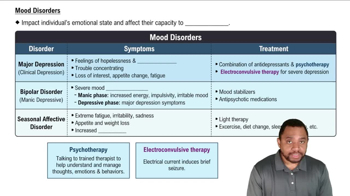
What are mood disorders?
Mood disorders impact an individual's emotional state and affect their ability to function.
What is psychotherapy?
Psychotherapy is talking to a trained therapist to help understand and manage thoughts, emotions, and behaviors.
What is electroconvulsive therapy (ECT) and when is it used?
ECT involves running an electrical current to induce brief seizures and is used for severe cases of depression.
What are common symptoms of Major Depression?
Symptoms include feelings of hopelessness, sadness, trouble concentrating, loss of interest, appetite changes, and fatigue.
How is Major Depression typically treated?
It is treated with a combination of antidepressants and psychotherapy, and ECT for severe cases.
What characterizes Bipolar Disorder?
Bipolar Disorder is characterized by severe mood swings, including manic (high energy) and depressive (low energy) phases.
What treatments are used for Bipolar Disorder?
Mood stabilizers and antipsychotic medications are commonly used to treat Bipolar Disorder.
What is Seasonal Affective Disorder (SAD) and what are its symptoms?
SAD involves bouts of extreme fatigue, irritability, sadness, appetite and weight changes, and increased sleep, often during dreary seasons.
How is Seasonal Affective Disorder treated?
Light therapy, exercise, diet changes, and sleep adjustments are used to treat SAD.
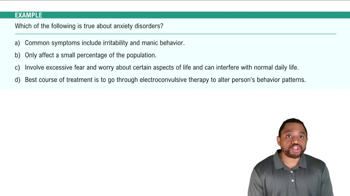
What are anxiety disorders and what do they affect?
Anxiety disorders impact emotions, thoughts, and physical responses, leading to fear and anxiety.
What are the main treatments for anxiety disorders?
Behavioral therapy and cognitive-behavioral therapy are the main treatments for anxiety disorders.
What is Generalized Anxiety Disorder (GAD)?
GAD is characterized by excessive anxiety and worry, sleep issues, muscle tension, fatigue, and trouble concentrating.
What is a panic attack and what disorder is it associated with?
A panic attack involves sudden intense fear with symptoms like rapid heartbeat, sweating, and shortness of breath, and is associated with Panic Disorder.
What are phobic disorders?
Phobic disorders involve intense fear or anxiety about specific objects, situations, or activities, disproportionate to actual danger.
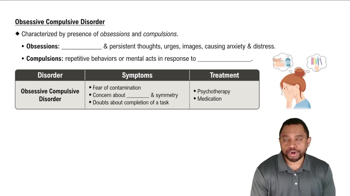
What is Obsessive-Compulsive Disorder (OCD)?
OCD is characterized by obsessions (persistent thoughts) and compulsions (repetitive behaviors) that cause anxiety and distress.
How is OCD treated?
OCD is treated with psychotherapy and medications to help manage obsessions and compulsions.
What are the main symptoms of schizophrenia?
Symptoms include delusions, hallucinations, disorganized thinking, and abnormal motor behavior.
What treatments are available for schizophrenia?
Treatments include medications, psychotherapy, and hospitalization in severe cases for safety and monitoring.
 Back
Back

 3:26
3:26