Pearson+ LogoPearson+ Logo

Understanding Behavior Change quiz Flashcards

Back
Understanding Behavior Change quiz
Control buttons has been changed to "navigation" mode.
1/20
  • What is behavior change in the context of personal health?

    Behavior change is the process of developing healthy habits while overcoming unhealthy ones.
  • Name the two main models used to understand behavior change.

    The two main models are the Health Belief Model (HBM) and the Transtheoretical Model (Stages of Change).
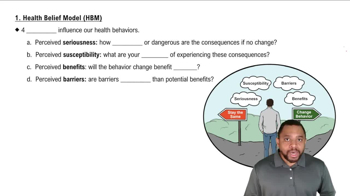
  • List the four key beliefs of the Health Belief Model.

    The four key beliefs are perceived seriousness, perceived susceptibility, perceived benefits, and perceived barriers.
  • What does 'perceived seriousness' refer to in the Health Belief Model?

    Perceived seriousness refers to how serious or dangerous the consequences are if no change happens.
  • How is 'perceived susceptibility' defined in the Health Belief Model?

    Perceived susceptibility is your risk of experiencing the consequences of not changing your behavior.
  • What question does 'perceived benefits' address in the Health Belief Model?

    Perceived benefits address whether the behavior change will improve your life.
  • What are 'perceived barriers' in the Health Belief Model?

    Perceived barriers are the obstacles that might prevent you from making a behavior change.
  • Why is it important to balance perceived benefits and barriers?

    Balancing benefits and barriers helps you decide if the effort to change is worth the potential rewards.
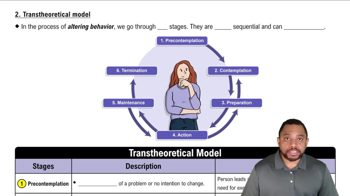
  • How many stages are in the Transtheoretical Model of behavior change?

    There are six stages in the Transtheoretical Model.
  • What is the first stage of the Transtheoretical Model called?

    The first stage is called Precontemplation.
  • Describe the Precontemplation stage in the Transtheoretical Model.

    In Precontemplation, a person is unaware of a problem or has no intention to change.
  • What happens during the Contemplation stage of behavior change?

    During Contemplation, a person acknowledges a problem and intends to make a change within six months.
  • What is the main focus of the Preparation stage in the Transtheoretical Model?

    Preparation involves planning and setting a goal to take action within one month.
  • What characterizes the Action stage in the Transtheoretical Model?

    The Action stage is when a person actively implements the behavior change.
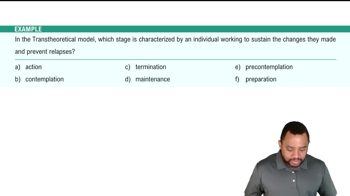
  • How long must a new behavior be maintained to reach the Maintenance stage?

    A new behavior must be maintained for at least six months to reach the Maintenance stage.
  • What is the Termination stage in the Transtheoretical Model?

    Termination is when the new behavior is fully integrated into daily life with little or no temptation to revert.
  • Can the stages of the Transtheoretical Model overlap or occur out of order?

    Yes, the stages can overlap and do not always occur in a strict sequential order.
  • Why is consistency important in the Maintenance stage?

    Consistency helps ensure the new behavior becomes a lasting habit, even if relapses occur.
  • What is an example of a behavior change using the Transtheoretical Model?

    An example is starting to walk regularly, progressing from planning to action, and eventually making walking a daily routine.
  • How do the Health Belief Model and Transtheoretical Model help individuals?

    They help individuals understand their decision-making processes and recognize risks and benefits to foster lasting behavior change.