General Adaptation Syndrome quiz #1 Flashcards

General Adaptation Syndrome quiz #1
Control buttons has been changed to "navigation" mode.
1/21
  • What is an example of the exhaustion stage of the general adaptation syndrome?
    An example of the exhaustion stage is experiencing negative health effects such as hypertension, gastrointestinal issues, poor immune function, or feeling extreme fatigue after prolonged stress.
  • What is an example of the alarm reaction stage of the general adaptation syndrome?
    An example of the alarm reaction stage is the initial fight-or-flight response, such as a racing heart, increased blood pressure, and panic when first encountering a stressor.
  • Which stage of the general adaptation syndrome is characterized by fatigue?
    The exhaustion stage of the general adaptation syndrome is characterized by fatigue.
  • What are the three stages of the general adaptation syndrome?
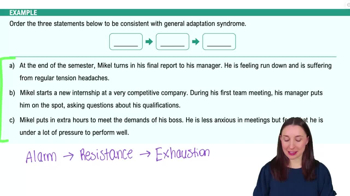
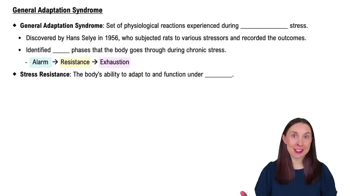
    The three stages are alarm, resistance, and exhaustion.
  • During which stage of Selye’s general adaptation syndrome is a person especially vulnerable to illness?
    A person is especially vulnerable to illness during the exhaustion stage.
  • What is not typical of the exhaustion stage of the general adaptation syndrome?
    Adaptation to stress is not typical of the exhaustion stage; instead, resources are depleted and negative health effects occur.
  • What are the main features of general adaptation syndrome?
    General adaptation syndrome features three stages: alarm (initial fight-or-flight response), resistance (adaptation to stress), and exhaustion (depletion of resources and negative health effects).
  • Which statement about general adaptation syndrome (GAS) is true?
    General adaptation syndrome describes the body's physiological response to chronic stress in three stages: alarm, resistance, and exhaustion.
  • Which parts of the nervous system are associated with the general adaptation syndrome?
    The sympathetic nervous system is primarily associated with the general adaptation syndrome, especially during the alarm phase.
  • What events occur during the resistance phase of the general adaptation syndrome?
    During the resistance phase, the body adapts to the stressor, maintaining a stress response with decreased intensity and higher stress resistance.
  • What does the general adaptation syndrome response include?
    The general adaptation syndrome response includes physiological changes across three stages: alarm, resistance, and exhaustion.
  • Which hormone dominates during the alarm phase of the general adaptation syndrome?
    Adrenaline (epinephrine) dominates during the alarm phase.
  • During which phase of the general adaptation syndrome do the nervous and endocrine systems continue to be activated?
    The resistance phase is characterized by continued activation of the nervous and endocrine systems.
  • What type of conditions trigger the general adaptation syndrome?
    Chronic or prolonged stress conditions trigger the general adaptation syndrome.
  • Which hormones dominate during the resistance phase of the general adaptation syndrome?
    Cortisol and other stress hormones dominate during the resistance phase.
  • What physiological changes occur during the alarm phase of the general adaptation syndrome?
    During the alarm phase, there is activation of the sympathetic nervous system, leading to increased heart rate, blood pressure, and respiration.
  • Which phase of the general adaptation syndrome is dominated by cortisol?
    The resistance phase is dominated by cortisol.
  • What are typical health effects caused by general adaptation syndrome?
    General adaptation syndrome can cause hypertension, gastrointestinal issues, poor immune function, muscle tension, headaches, and type 2 diabetes.
  • What are the phases that characterize general adaptation syndrome?
    General adaptation syndrome is characterized by the alarm, resistance, and exhaustion phases.
  • What is an example of the exhaustion stage of the general adaptation syndrome?
    An example is experiencing extreme fatigue, weakness, and health problems after prolonged stress.
  • Which stage of the general adaptation syndrome is characterized by fatigue, weakness, and soreness?
    The exhaustion stage is characterized by fatigue, weakness, and soreness.