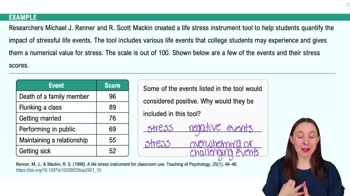
Stress is a psychological and physiological response to perceived challenges, threats, or overwhelming events, involving both mental appraisal and bodily reactions.
How can stress be beneficial?
Stress can be beneficial by motivating individuals and enhancing performance, especially when it is appraised as a challenge rather than a threat.
What is a stressor?
A stressor is any event or situation that evokes a psychological and physiological stress response.
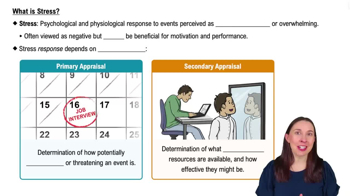
What is the difference between primary and secondary appraisal in stress?
Primary appraisal is the initial judgment of how harmful or threatening a stressor is, while secondary appraisal involves evaluating available coping resources and their effectiveness.
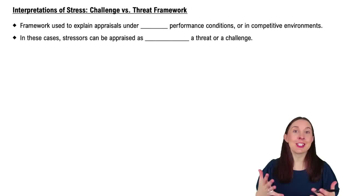
How does the challenge versus threat framework explain stress appraisal?
The challenge versus threat framework explains that stressors can be appraised as threats if perceived as harmful, or as challenges if seen as opportunities for growth, which influences physiological responses and performance.
What is the role of mindset in managing stress?
Mindset plays a crucial role in managing stress, as interpreting stressors as challenges rather than threats can lead to improved physiological responses and better performance.
How does appraisal affect the stress response?
Appraisal determines whether a stressor is seen as harmful or as an opportunity, influencing both psychological and physiological responses to stress.
What is coping in the context of stress?
Coping refers to any method, positive or negative, that an individual uses to deal with stress.
Can stress be neutral?
Yes, some stressors are appraised as neutral and do not elicit strong threat or challenge responses.
What is the physiological component of stress?
The physiological component of stress involves bodily reactions such as increased heart rate, hormone release, and other changes in response to perceived challenges.
How can shifting your mindset from threat to challenge affect performance?
Shifting your mindset from threat to challenge can improve performance by eliciting more adaptive physiological responses.
What is the importance of secondary appraisal in stress management?
Secondary appraisal is important because it involves assessing coping resources, which can influence whether stress is reduced or increased.
What is an example of a stressor being appraised as a challenge?
An example is feeling prepared for an exam and viewing it as an opportunity to demonstrate skills and achieve success.
What is an example of a stressor being appraised as a threat?
An example is feeling unprepared for an important job interview and fearing negative consequences if unsuccessful.
How does stress affect performance?
Stress can enhance performance when appraised as a challenge, but may hinder performance when appraised as a threat.
What is the psychological component of stress?
The psychological component involves thoughts, worries, and mental appraisal of the stressor.
What is the role of coping resources in stress?
Coping resources help determine how effectively an individual can manage stress, influencing the overall stress response.
How does the appraisal of a stressor influence physiological responses?
Appraising a stressor as a challenge or threat leads to different physiological responses, which can affect readiness and performance.
What is the challenge mindset in stress?
A challenge mindset involves viewing stressors as opportunities for growth and achievement, leading to more adaptive responses.
What is the threat mindset in stress?
A threat mindset involves perceiving stressors as harmful or overwhelming, which can lead to maladaptive responses.
Which level of anxiety is most likely to enhance a person's learning abilities according to the challenge versus threat framework in stress psychology?
A moderate level of anxiety, where stress is appraised as a challenge rather than a threat, is most likely to enhance learning abilities. Viewing stressors as opportunities for growth and achievement can increase motivation and performance, supporting better learning outcomes.
 Back
Back
 04:01
04:01