
Funny literal translations from around the world

Charlotte Guest
Charlotte Guest
Two friends reading a book together smiling
Reading time: 3 minutes

One of the fun things about learning a new language is discovering how different cultures describe everyday objects and concepts. Sometimes, these descriptions are so literal and imaginative that they bring a smile to our faces (and maybe a few confused looks). Here are some examples of words in other languages that, when translated literally, are probably not what you expected.

Funny literal translations from around the world
Play
Privacy and cookies

By watching, you agree Pearson can share your viewership data for marketing and analytics for one year, revocable by deleting your cookies.

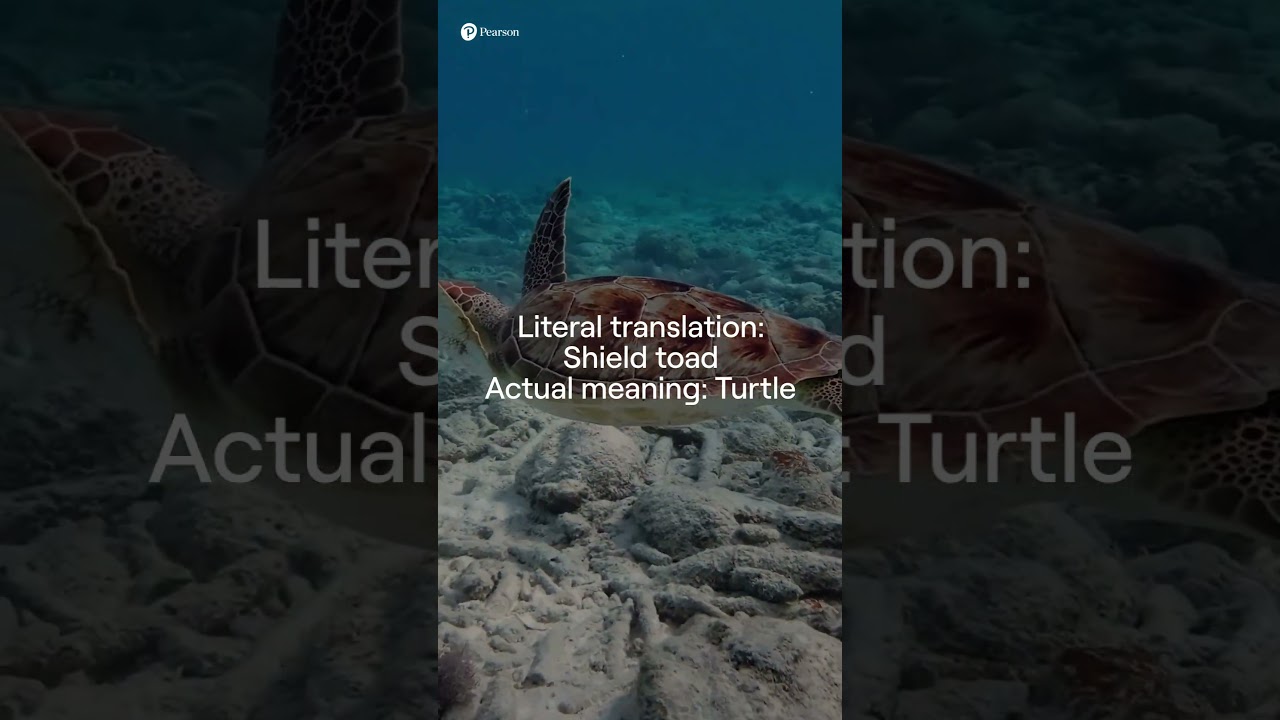
1. Schildpad (Dutch)

Literal translation: Shield Toad 

Actual meaning: Turtle

The Dutch word for turtle is "schildpad," which translates to "shield toad." It’s a descriptive term that paints a vivid picture of a turtle carrying its protective shell like a knight’s shield, even if it amusingly refers to the turtle as a toad.

2. Kummerspeck (German)

Literal translation: Grief Bacon 

Actual meaning: Excess weight gained from emotional overeating

The Germans have a knack for creating compound words that perfectly capture complex emotions. "Kummerspeck" is one such word, combining "Kummer" (grief) and "Speck" (bacon) to describe the extra pounds one might gain from comfort eating during tough times.

3. Pamplemousse (French)

Literal translation: Pompous Lemon 

Actual meaning: Grapefruit

The French word for grapefruit is "pamplemousse," which sounds like "pompous lemon." While grapefruits are indeed larger than lemons, the term adds a humorous flair to this citrus fruit.

4. Sobremesa (Spanish)

Literal translation: Over table 

Actual meaning: The time spent chatting and relaxing at the table after a meal

In Spain, meals are not just about eating; they are social events. "Sobremesa" refers to the time spent lingering at the table, enjoying conversation and company after the meal is finished.

5. Drachenfutter (German)

Literal translation: Dragon fodder 

Actual meaning: A peace offering to a partner after a quarrel

Another gem from the German language, "Drachenfutter" combines "Drache" (dragon) and "Futter" (fodder) to describe a gift given to calm an angry partner.

6. L’esprit de l’escalier (French)

Literal translation: Staircase wit 

Actual meaning: The perfect retort or comeback that one thinks of only after the moment has passed

The French phrase "l’esprit de l’escalier" describes the phenomenon of thinking of the perfect comeback too late. It’s a poetic way of expressing that frustrating moment when the right words come to you after the conversation has ended.

7. Utepils (Norwegian)

Literal translation: Outside beer 

Actual meaning: The act of enjoying a beer outdoors

In Norway, "utepils" is the delightful experience of drinking beer outside, especially when the weather is nice. It’s a word that perfectly captures the simple joy of enjoying a cold beverage in the great outdoors.

8. Backpfeifengesicht (German)

Literal translation: A face that needs a slap 

Actual meaning: A face that is begging to be slapped

9. Gattara (Italian)

Literal translation: Cat lady 

Actual meaning: An old woman who takes care of stray cats

10. Desvelado (Spanish)

Literal translation: Unveiled 

Actual meaning: Sleep-deprived

In Spanish, "desvelado" literally means "unveiled," but it’s used to describe someone who is sleep-deprived. It’s a poetic way of saying that someone’s lack of sleep has been revealed.

So, the next time you’re learning a new language, keep an eye out for these delightful gems—they’re sure to bring a smile to your face. Does your own language have any similarly amusing or descriptive words? You might be surprised at what you discover.

More blogs from Pearson

  • Two business people working together on a tablet
    How to politely say no in business English
    By Charlotte Guest
    Reading time: 3 minutes

    Knowing how to say “no” politely is an important communication skill in the workplace. Whether you are declining a meeting, turning down a request or rejecting a business proposal, the way you respond can affect professional relationships.

    For English learners, saying no can feel especially difficult. Many people worry about sounding rude, unhelpful or unfriendly. The good news is that Business English includes many polite and professional phrases that help you refuse requests clearly while still showing respect.

    Here are five useful ways to politely say no in Business English, with examples and tips for when to use them.

    1. “Thank you for considering me, but I must respectfully decline.”

    This phrase is polite, professional and direct. It shows appreciation for the opportunity while making your decision clear.

    When to use it

    • Declining a job offer
    • Turning down a business proposal
    • Refusing a formal invitation

    Example

    “Thank you for considering me, but I must respectfully decline the offer at this time.”

    Why it works

    This phrase sounds professional because it:

    • Starts with appreciation
    • Communicates your answer clearly
    • Maintains a respectful tone

    2. “I appreciate your interest but, unfortunately, I’m unable to commit at this time.”

    This expression is useful when you cannot accept something because of time, workload or other responsibilities.

    When to use it

    • Declining extra work
    • Saying no to projects
    • Refusing invitations professionally

    Example

    “I appreciate your interest but, unfortunately, I’m unable to commit at this time due to other priorities.”

    Why it works

    This phrase helps soften the refusal and explains that your decision is based on circumstances rather than the person themselves.

    3. “I understand where you’re coming from, but I don’t think it’s the right fit for me.”

    This is a good phrase for situations where you want to disagree politely or decline an offer that does not meet your needs.

    When to use it

    • Declining a service or product
    • Rejecting a business idea
    • Turning down partnerships

    Example

    “I understand where you’re coming from, but I don’t think it’s the right fit for our team right now.”

    Why it works

    The phrase shows empathy first before giving your opinion. This helps keep the conversation positive and respectful.

    4. “Thank you for the opportunity, but I’m afraid it’s not something I can take on right now.”

    This phrase is useful when you may be interested in the future, but cannot accept now.

    When to use it

    • Declining freelance work
    • Refusing additional responsibilities
    • Saying no to speaking events or collaborations

    Example

    “Thank you for the opportunity, but I’m afraid it’s not something I can take on right now.”

    Why it works

    This response sounds polite and professional without completely closing the door to future opportunities.

    5. “Thank you for thinking of me, but I won’t be able to.”

    This is a shorter and more informal way to politely say no.

    When to use it

    • Declining small requests
    • Saying no to casual invitations
    • Refusing minor tasks

    Example

    “Thank you for thinking of me, but I won’t be able to attend the meeting tomorrow.”

    Why it works

    It is simple, clear and friendly. However, it works best in less formal business situations.

  • Students studying together at a table
    What students wish they’d done earlier when planning to study in the USA
    By Abi Fordham
    Reading time: 2 minutes

    If you spend enough time reading student forums, Reddit threads or comment sections about studying in the USA, you begin to notice a pattern.

    There’s plenty of advice about what students should do next. But much less about what they wish they’d done earlier.

    Those reflections usually appear later in the process, after applications have been submitted or deadlines have passed. Often, they come with a sense of hindsight: “I wish I’d known this sooner.”

    For students still early in the process, planning ahead can make everything feel far more manageable – and these tips are here to help.

    Starting earlier helps more than you think

    One of the most common reflections from students is that they waited until something felt urgent.

    Until a deadline appeared. Until a university responded. Until friends started applying.

    By that point, the process often felt rushed and stressful.

    Students who started earlier didn’t necessarily have everything figured out. In many cases, they simply gave themselves more time to think clearly, explore options and make decisions without pressure.

    Starting early doesn’t mean completing everything immediately. It simply means beginning before the process becomes overwhelming.

    Many students don’t realize how much flexibility they have

    Many students assume there is only one way to complete each step of the study abroad process. One test format. One timeline. One fixed path.

    In reality, there are now more flexible options available to students applying to universities in the USA.

    For example, some English language tests can now be taken from home, making it easier for students to fit preparation and testing around school, work or other commitments. This can reduce travel time, scheduling difficulties and unnecessary stress earlier in the application journey.

    Having more flexibility often helps students feel more in control of the process overall.

    Comparing timelines usually creates more stress

    This is something that comes up constantly in student discussions online.

    One student already has an offer. Another has booked their English test. Someone else is still deciding where to apply.

    It’s easy to feel behind, even when you’re not.

    What many students realize later is that study abroad timelines are rarely comparable. Different universities, application requirements, intake dates and personal circumstances all affect how long the process takes.

    The students who felt most confident were usually the ones focused on their own next step rather than someone else’s progress.

    Small steps create momentum

    Another common theme in student reflections is the importance of momentum.

    Not huge achievements. Just consistent progress.

    Researching universities. Booking a test. Submitting one document. Sending one email.

    Small actions help the process feel more realistic and manageable. Over time, they build confidence and make studying abroad feel achievable rather than distant.

    Confidence often comes later than expected

    Many students spend the early stages of the process questioning themselves.

    Am I choosing the right university?
    Am I applying at the right time?
    Am I making the right decisions?

    Later, many reflect that they were more prepared than they initially believed.

    The process itself teaches students how to make decisions, adapt to uncertainty and move forward even without having every answer immediately.

    Waiting until you feel completely ready can sometimes unnecessarily delay progress.

    Final thoughts

    Planning to study in the USA is a major decision, and it’s normal for the process to feel uncertain at times. But many students later realise that starting earlier, staying focused on manageable steps and avoiding unnecessary comparison made the experience much easier.

    You do not need to have everything figured out straight away. Often, the most helpful thing is simply beginning.

  • A teacher working on a interactive whiteboard
    Low-prep activities for busy language teachers
    By Charlotte Guest
    Reading time: 4 minutes

    Teaching a language requires time, effort and planning. Many teachers want creative lessons but often don't have time to prepare activities. Luckily, effective language practice doesn't have to be complex.

    Simple activities can still enhance students' speaking, listening, reading and vocabulary skills. Low-prep activities are versatile, suitable for teens or adults, online or in person, and across various language levels.

    Below are some easy classroom activities that require minimal preparation while keeping students active and engaged.

    1. Would you rather…?

    This activity is simple, fun and great for speaking practice.

    Write two choices on the board and ask students which one they prefer.

    For example:

    • Would you rather live in the mountains or by the sea?
    • Would you rather travel by train or plane?
    • Would you rather work at night or in the morning?

    Students discuss their answers in pairs or small groups.

    Why it works

    • Encourages speaking
    • Builds confidence
    • Helps students explain opinions
    • Easy to adapt for different levels

    Ask higher-level students to explain their reasons in more detail.

    2. The one-minute talk

    Choose a simple topic and give students one minute to speak.

    Topics can include:

    • My favorite food
    • A place I want to visit
    • My daily routine
    • A good movie I watched
    • My perfect weekend

    Students can speak in pairs, small groups or in front of the class.

    Why it works

    • Improves fluency
    • Builds speaking confidence
    • Requires no materials
    • Helps students think quickly in English

    If students feel nervous, give them one minute to prepare their ideas first.