Adaptation of Sensory Receptors definitions Flashcards

Adaptation of Sensory Receptors definitions
Control buttons has been changed to "navigation" mode.
1/10
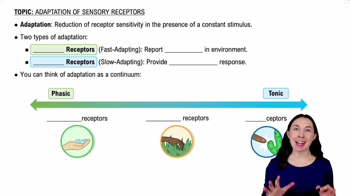
  • Adaptation
    Reduction in receptor sensitivity to a constant stimulus, conserving energy and maintaining neural health.
  • Phasic Receptors
    Fast adapting receptors that respond quickly to changes but reduce firing when the stimulus is constant.
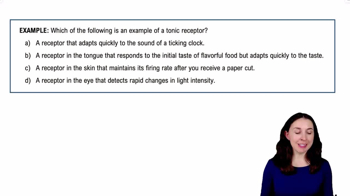
  • Tonic Receptors
    Slow adapting receptors that provide a sustained response even when the stimulus is constant.
  • Peripheral Nervous System
    Part of the nervous system containing phasic and tonic receptors, responsible for sensory adaptation.
  • Thermoreceptors
    Receptors that detect temperature changes, exhibiting both phasic and tonic properties.
  • Nociceptors
    Pain receptors that provide a sustained response, crucial for awareness and behavioral adjustment.
  • Proprioceptors
    Receptors providing information about body position and movement, essential for spatial navigation.
  • Mechanoreceptors
    Receptors responding to pressure and vibration, exhibiting both phasic and tonic properties.
  • Neural Health
    State of the nervous system maintained by adaptation, preventing constant neuron firing.
  • Stimulus
    An external factor that receptors respond to, which can be constant or changing.