What type of chemical reaction is involved in the breakdown of starch by digestive enzymes, and what happens to energy during this process?
The breakdown of starch by digestive enzymes is an exergonic reaction, in which complex starch molecules are broken down into simpler molecules, releasing energy into the environment.
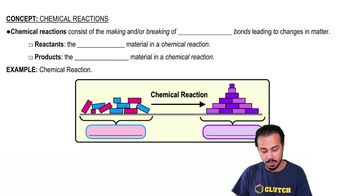
What are the starting materials in a chemical reaction called?
The starting materials in a chemical reaction are called reactants. They are the ingredients that undergo change during the reaction.
What are the substances formed at the end of a chemical reaction called?
The substances formed at the end of a chemical reaction are called products. They result from the transformation of reactants.
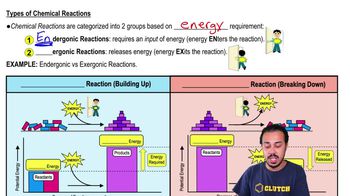
How can you remember the difference between endergonic and exergonic reactions using the prefixes?
You can remember that 'en' in endergonic stands for energy entering, while 'ex' in exergonic stands for energy exiting. This helps distinguish which reaction requires or releases energy.
In an endergonic reaction, how does the energy of the products compare to the reactants?
In an endergonic reaction, the products have higher energy than the reactants. This is because energy is absorbed during the reaction.
What visual cue in a graph indicates an exergonic reaction?
In a graph of an exergonic reaction, the reactants start at a higher energy level than the products. This drop in energy shows that energy is released.
What type of reaction is associated with building larger, more complex molecules from smaller ones?
Building larger, more complex molecules from smaller ones is characteristic of endergonic reactions. These reactions require an input of energy.
What happens to energy during an exergonic reaction?
During an exergonic reaction, energy is released into the environment. This occurs as complex molecules are broken down into simpler ones.
How does the progress of a reaction relate to potential energy on a reaction graph?
The progress of a reaction is shown on the x-axis, while potential energy is shown on the y-axis. The change in energy from reactants to products can be visualized as the reaction proceeds.
Why are endergonic and exergonic reactions considered opposites?
Endergonic reactions absorb energy to build complex molecules, while exergonic reactions release energy by breaking down molecules. Their energy flow directions are opposite.