Pearson+ LogoPearson+ Logo
Back

Connective Tissue Proper: Dense Connective Tissue quiz #1

Control buttons has been changed to "navigation" mode.
1/15
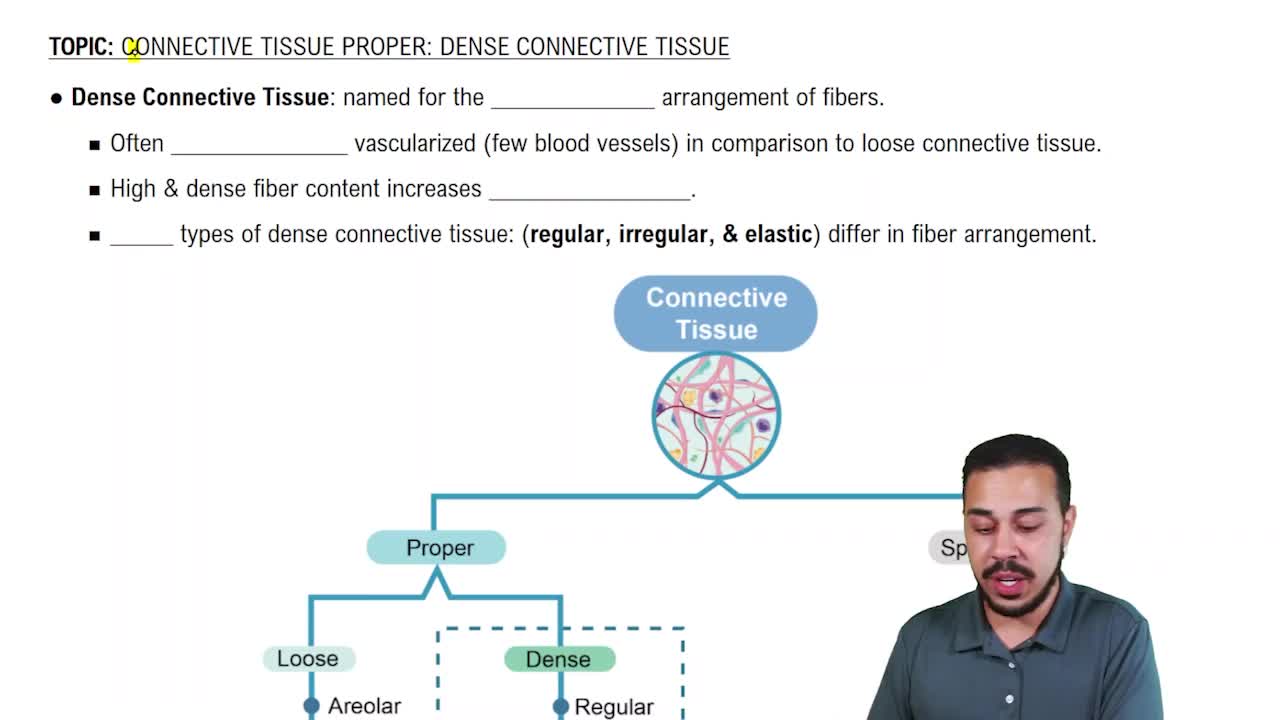
  • What are the three types of dense connective tissue proper, and how do their fiber arrangements and primary functions differ?

    The three types of dense connective tissue proper are dense regular, dense irregular, and elastic connective tissue. Dense regular connective tissue has parallel collagen fibers, providing strength in one direction (found in tendons and ligaments). Dense irregular connective tissue has randomly arranged collagen fibers, offering strength in multiple directions (found in the dermis and around joints/organs). Elastic connective tissue contains mostly elastic fibers in a parallel arrangement, allowing tissues to stretch and return to shape (found in artery walls, respiratory pathways, and spinal ligaments).
  • What are the three types of dense connective tissue proper?

    The three types are dense regular, dense irregular, and elastic connective tissue.
  • How are the fibers arranged in dense regular connective tissue, and what function does this provide?

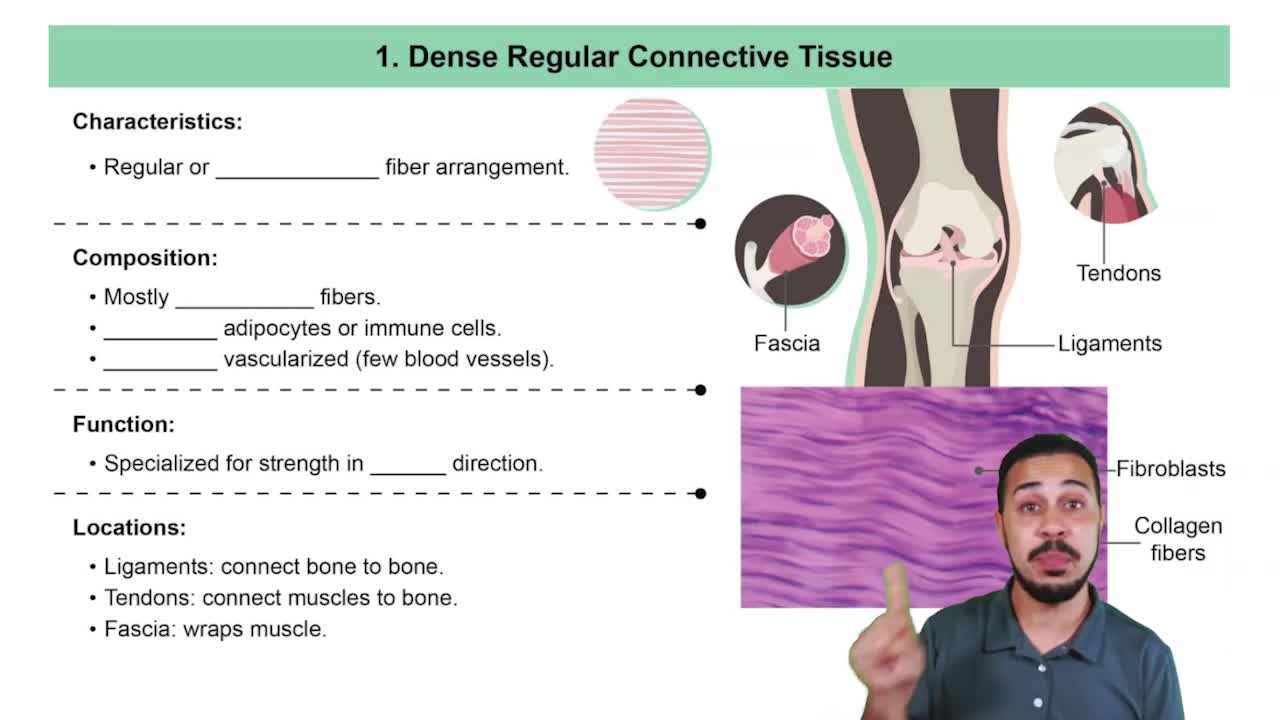
    Fibers are arranged in a parallel pattern, providing strength in one direction, which is important for tendons and ligaments.
  • Where in the body would you most likely find dense irregular connective tissue, and why?

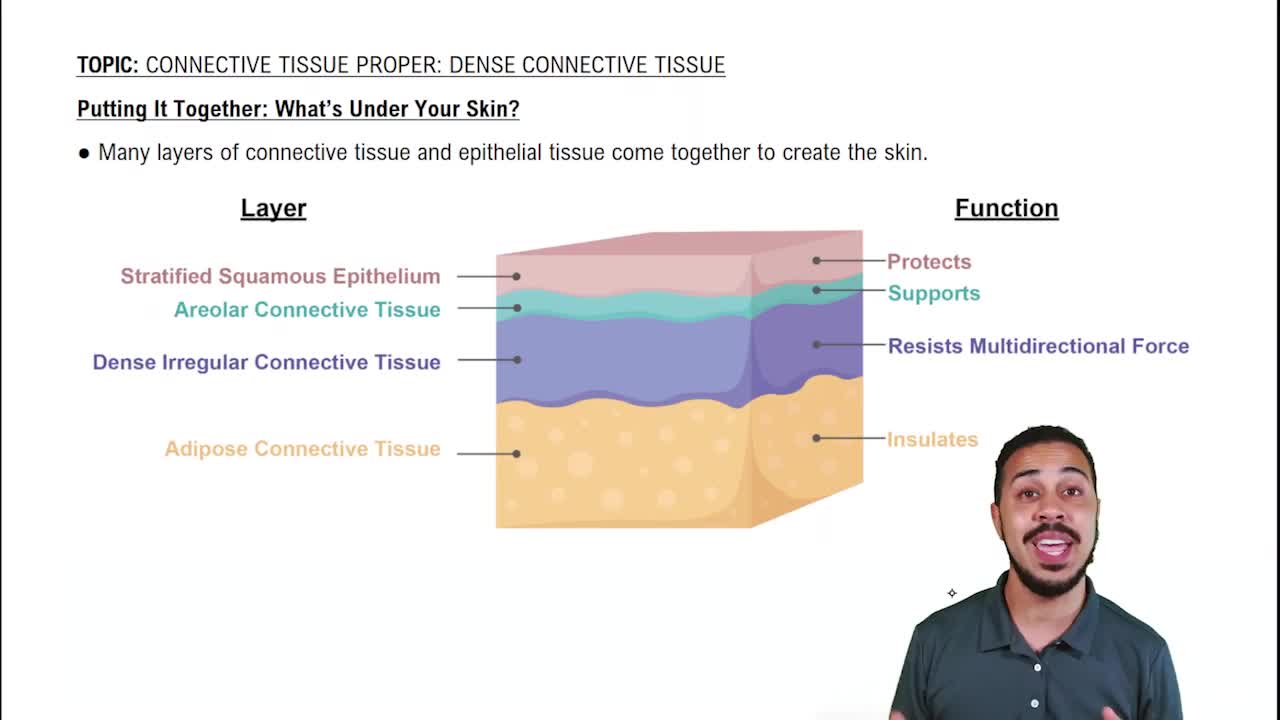
    Dense irregular connective tissue is found in the dermis of the skin and around joints and organs because it provides strength in multiple directions.
  • What is the primary fiber type in both dense regular and dense irregular connective tissues, and what property does it give these tissues?

    Collagen fibers are the primary type, giving these tissues strength and some flexibility.
  • Why do dense connective tissues heal more slowly than loose connective tissues?

    Dense connective tissues are poorly vascularized, meaning they have fewer blood vessels and receive less nutrients, leading to slower healing.
  • What is the main functional difference between dense regular and dense irregular connective tissue?

    Dense regular connective tissue provides strength in one direction, while dense irregular connective tissue provides strength in multiple directions.
  • What is the dominant fiber in elastic connective tissue, and what function does it serve?

    Elastic fibers dominate, allowing tissues to stretch and return to their original shape.
  • Name two locations in the body where elastic connective tissue is found and explain its importance there.

    Elastic connective tissue is found in artery walls and respiratory pathways, where it allows these structures to expand and recoil as needed.
  • What are the main layers under the skin and which type of dense connective tissue is found in the dermis?

    The main layers are epithelial tissue, areolar connective tissue, dense irregular connective tissue (in the dermis), and adipose tissue in the subcutaneous layer.
  • Which type of connective tissue attaches muscle to bone?

    Dense regular connective tissue forms tendons, which attach muscle to bone.
  • What is the main function of dense regular connective tissue in the body?

    Dense regular connective tissue provides great strength in one direction, making it ideal for structures like tendons and ligaments.
  • What are the primary protein fibers found in dense regular connective tissue, and what property do they provide?

    Dense regular connective tissue is primarily composed of collagen fibers, which provide strength and a small amount of flexibility.
  • Why do dense connective tissues, such as tendons and ligaments, heal slowly after injury?

    Dense connective tissues are poorly vascularized, meaning they have few blood vessels and receive limited nutrients, resulting in slow healing.
  • Besides tendons, where else in the body can dense regular connective tissue be found?

    Dense regular connective tissue is also found in ligaments, which connect bone to bone, and in fascia, which wraps around muscles.