Pearson+ LogoPearson+ Logo
Back

Connective Tissue Proper: Loose Connective Tissue quiz #1

Control buttons has been changed to "navigation" mode.
1/10
  • What is the function of the adipose tissue surrounding the heart?

    The adipose tissue surrounding the heart serves to cushion and protect the organ by absorbing shock, provides insulation to help maintain temperature, and acts as an energy reservoir by storing fats that can be mobilized when needed.
  • What is the main structural difference between areolar and reticular connective tissue?

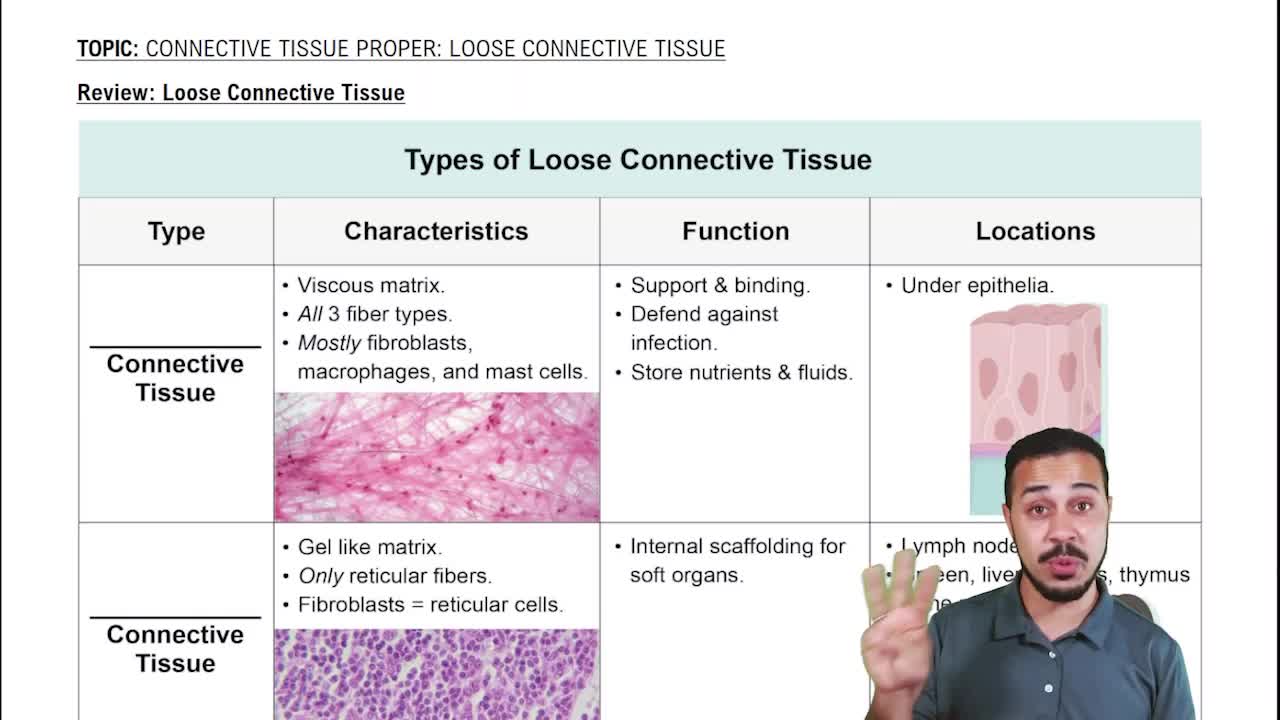
    Areolar connective tissue contains all three types of protein fibers, while reticular connective tissue contains only reticular fibers. This difference leads to greater structural and functional diversity in areolar tissue.
  • Why is areolar connective tissue referred to as the universal packing material of the body?

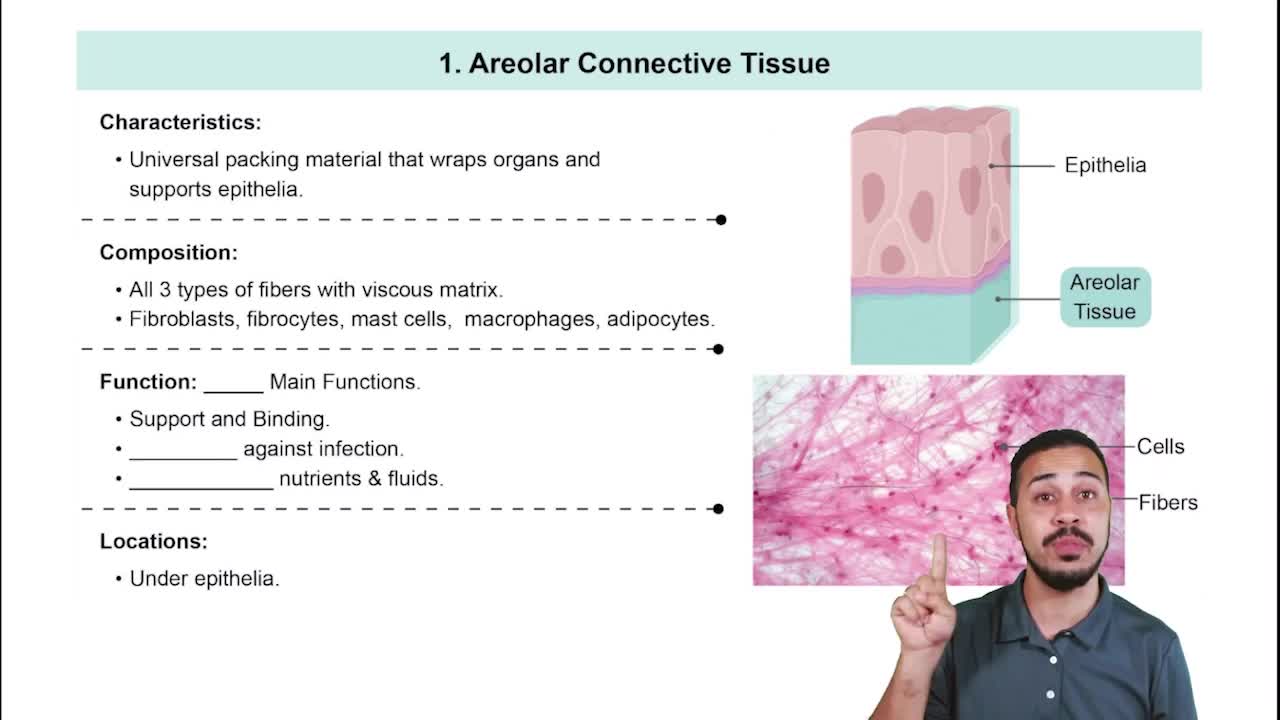
    Areolar connective tissue is found throughout the body in spaces between organs and beneath epithelia, where it cushions, supports, and binds tissues together. Its widespread distribution and versatile functions earn it this nickname.
  • How do adipocytes in adipose tissue change in size?

    Adipocytes enlarge as they store more lipids and shrink when they release lipids for energy. Mature adipocytes do not divide but can increase or decrease in size based on fat storage.
  • What is the primary function of reticular connective tissue in lymph nodes and spleen?

    Reticular connective tissue forms the internal scaffolding that supports the structure of lymph nodes and spleen. This framework helps filter blood cells and microbes in these organs.
  • How does brown adipose tissue help infants maintain body temperature?

    Brown adipose tissue contains many mitochondria that generate heat instead of storing energy. This heat production is crucial for infants, who lack a strong shivering reflex.
  • What role do mast cells play in areolar connective tissue?

    Mast cells in areolar connective tissue release histamine, which is important for inflammation. This helps the tissue defend against infection and invaders.
  • Where is adipose connective tissue commonly found in the body besides under the skin?

    Adipose connective tissue is found around organs such as the kidneys and heart, as well as around the eyes and in the breasts. It provides cushioning, protection, and energy storage in these locations.
  • Why does reticular connective tissue lack functional diversity compared to areolar connective tissue?

    Reticular connective tissue only contains reticular fibers, resulting in less structural variety. This limited structure restricts its functions mainly to providing internal support in soft organs.
  • How do nutrients reach the avascular epithelial tissues supported by areolar connective tissue?

    Areolar connective tissue is vascular and contains blood vessels that deliver nutrients. These nutrients diffuse from the areolar tissue to the overlying avascular epithelial cells.