Back

Electron Transport Chain quiz

Control buttons has been changed to "navigation" mode.
1/21
  • What event takes place in the electron transport chain?

    Formation of water
  • What are the structural components of the electron transport chain?

    Mitochondrial inner membrane proteins
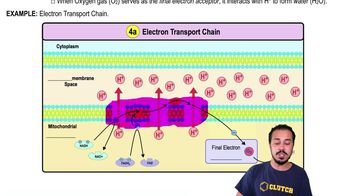
  • How is a gradient of H+ ions formed across the inner mitochondrial membrane?

    The gradient is formed by the pumping of hydrogen ions into the intermembrane space during the electron transport chain.
  • Which statement about the electron transport chain is false?

    It occurs in the cytoplasm
  • Which is the final electron acceptor in the electron transport chain?

    Oxygen gas (O2)
  • What process generates a proton-motive force in mitochondria?

    Electron transport chain
  • Where are the protein complexes associated with the electron transport chain located?

    In the inner mitochondrial membrane
  • Where does oxidative phosphorylation occur?

    In the inner mitochondrial membrane
  • Why must the electron transport chain proteins and molecules be embedded in a membrane?

    To facilitate the creation of a proton gradient across the membrane, which is essential for ATP synthesis.
  • What complex of ATP synthase is responsible for the transport of protons to the mitochondrial matrix?

    The F0 complex of ATP synthase
  • What biological system is best associated with ATP production?

    ATP production
  • Which metabolic pathway generates a proton gradient?

    The electron transport chain
  • What happens in the electron transport chain?

    Electrons are transferred through a series of proteins, creating a proton gradient that drives ATP synthesis.
  • Where are the complexes of the electron transport chain located?

    In the inner mitochondrial membrane
  • What is the function of each membrane protein complex in the electron transport chain?

    Proton pump
  • What is the function of ATP synthase in the electron transport chain?

    ATP synthase uses the proton gradient to synthesize ATP from ADP and inorganic phosphate.
  • What allows ATP to be produced with the electron transport chain?

    Proton gradient
  • What is the final (terminal) electron acceptor in the mitochondrial electron transport chain?

    Oxygen gas (O2)
  • How does the proton gradient help ATP synthase to make ATP?

    The proton gradient provides the energy needed for ATP synthase to convert ADP and inorganic phosphate into ATP.
  • During electron transport phosphorylation, what occurs?

    Electrons are transferred through the electron transport chain, creating a proton gradient that drives ATP synthesis.
  • Which process takes place in the inner membrane of mitochondria? A) Electron transport chain B) Glycolysis C) Fermentation D) Photosynthesis

    A) Electron transport chain