Endocytosis and Exocytosis definitions Flashcards

Endocytosis and Exocytosis definitions
Control buttons has been changed to "navigation" mode.
1/15
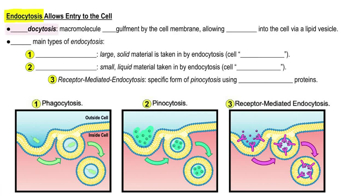
  • Endocytosis
    Process where macromolecules are engulfed by the cell membrane, forming vesicles for entry into the cell.
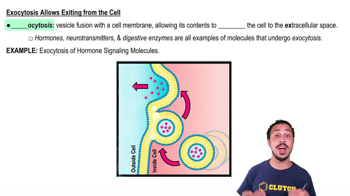
  • Exocytosis
    Vesicle fusion with the cell membrane, releasing contents into the extracellular space.
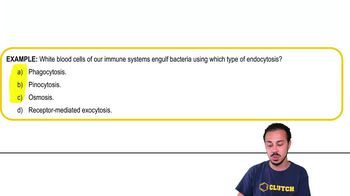
  • Phagocytosis
    Type of endocytosis where large solid materials are engulfed, known as cell eating.
  • Pinocytosis
    Type of endocytosis involving the uptake of liquid materials, known as cell drinking.
  • Receptor-mediated endocytosis
    Specific form of pinocytosis using receptor proteins to bind and internalize molecules.
  • Lipid vesicle
    Membrane-bound bubble formed during endocytosis to transport molecules into the cell.
  • Plasma membrane
    Cell boundary that regulates the entry and exit of substances, involved in endo- and exocytosis.
  • Hormones
    Molecules released via exocytosis to regulate physiological activities in the body.
  • Neurotransmitters
    Chemical messengers released by exocytosis to transmit signals across synapses.
  • Digestive enzymes
    Proteins secreted by exocytosis to aid in the breakdown of food substances.
  • Extracellular space
    Area outside the cell where molecules are released during exocytosis.
  • Receptor proteins
    Proteins that bind specific molecules to initiate receptor-mediated endocytosis.
  • Macromolecules
    Large molecules such as proteins and nucleic acids transported via endo- and exocytosis.
  • Vesicle fusion
    Process where a vesicle merges with the cell membrane to release its contents.
  • Cell eating
    Common term for phagocytosis, where cells ingest large particles.