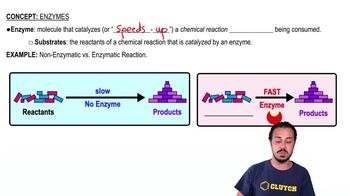
What is the primary function of enzymes in biological systems?
Enzymes act as catalysts that speed up chemical reactions in biological systems without being consumed or altered in the process.
How do substrates differ from reactants in the context of enzymatic reactions?
Substrates are the reactants specifically involved in enzymatic reactions, implying the presence of an enzyme, while reactants is a more general term for starting materials in any chemical reaction.
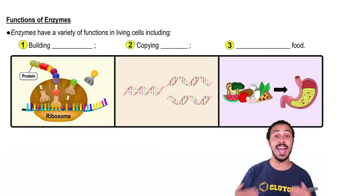
List three important functions of enzymes in living cells.
Enzymes are involved in building proteins, copying DNA, and aiding in the digestion of food.
Name three environmental factors that can affect enzyme activity and briefly explain their impact.
Temperature, pH, and reactant concentration affect enzyme activity. Extreme temperatures or pH can denature enzymes, reducing their function, while inappropriate reactant concentrations can limit or oversaturate enzyme activity.
What happens to an enzyme when it becomes denatured, and how does this affect its activity?
When an enzyme becomes denatured, it loses its shape and function, leading to decreased or lost enzymatic activity.
What is the primary function of enzymes in biological systems?
Enzymes act as catalysts that speed up chemical reactions in biological systems without being consumed or altered in the process.
How do substrates differ from reactants in the context of enzymatic reactions?
Substrates are the reactants specifically involved in enzymatic reactions, implying the presence of an enzyme, while reactants is a more general term for starting materials in any chemical reaction.
List three important functions of enzymes in living cells.
Enzymes are involved in building proteins, copying DNA, and aiding in the digestion of food.
Name three environmental factors that can affect enzyme activity and briefly explain their impact.
Temperature, pH, and reactant concentration affect enzyme activity. Extreme temperatures or pH can denature enzymes, reducing their function, while inappropriate reactant concentrations can limit or oversaturate enzyme activity.
What happens to an enzyme when it becomes denatured, and how does this affect its activity?
When an enzyme becomes denatured, it loses its shape and function, leading to decreased or lost enzymatic activity.
What is the function of amylase in the digestive system?
Amylase is an enzyme in the digestive system that catalyzes the breakdown of starches (complex carbohydrates) into simpler sugars, speeding up the digestion of carbohydrates.
What is the function of lipase in the digestive system?
Lipase is an enzyme in the digestive system that catalyzes the breakdown of fats (lipids) into fatty acids and glycerol, aiding in the digestion of dietary fats.