Introduction to Cell Division definitions Flashcards

Introduction to Cell Division definitions
Control buttons has been changed to "navigation" mode.
1/15
  • Cell Division
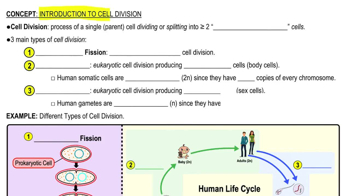
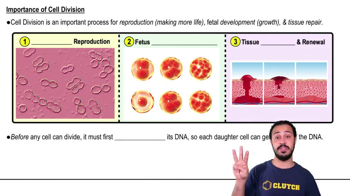
    The process where a parent cell divides into two or more daughter cells, crucial for reproduction, growth, and tissue repair.
  • Binary Fission
    A type of cell division in prokaryotic cells like bacteria, resulting in two genetically identical daughter cells.
  • Mitosis
    Eukaryotic cell division producing diploid somatic cells, essential for growth and tissue repair.
  • Meiosis
    Eukaryotic cell division producing haploid gametes, crucial for sexual reproduction and genetic diversity.
  • Daughter Cells
    Cells resulting from the division of a parent cell, each inheriting a copy of the parent cell's DNA.
  • Prokaryotic Cells
    Cells without a nucleus, such as bacteria, that divide by binary fission.
  • Eukaryotic Cells
    Cells with a nucleus, dividing by mitosis or meiosis, found in organisms like plants and animals.
  • Somatic Cells
    Body cells produced by mitosis, diploid with two copies of each chromosome.
  • Gametes
    Sex cells like sperm and eggs, produced by meiosis, haploid with one copy of each chromosome.
  • Diploid
    Cells with two copies of each chromosome, symbolized as 2n, typical of somatic cells.
  • Haploid
    Cells with one copy of each chromosome, symbolized as n, typical of gametes.
  • Zygote
    The diploid cell formed by the fusion of two haploid gametes during fertilization.
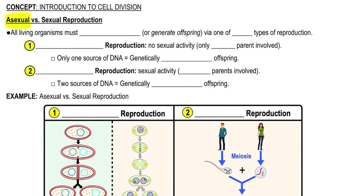
  • Asexual Reproduction
    Reproduction involving a single parent, producing genetically identical offspring.
  • Sexual Reproduction
    Reproduction involving two parents, resulting in genetically diverse offspring.
  • DNA Replication
    The process of duplicating DNA before cell division, ensuring each daughter cell receives a complete copy.