Introduction to DNA Replication definitions Flashcards

Introduction to DNA Replication definitions
Control buttons has been changed to "navigation" mode.
1/15
  • Semi-conservative replication
    A process where parental DNA strands separate and serve as templates for new complementary strands.
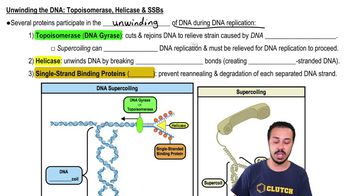
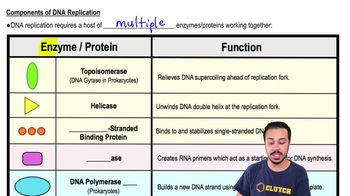
  • Topoisomerase
    An enzyme that relieves DNA supercoiling by cutting and rejoining DNA strands.
  • Helicase
    An enzyme that unwinds the DNA double helix by breaking hydrogen bonds at the replication fork.
  • Single-Stranded Binding Proteins
    Proteins that stabilize unwound DNA strands and prevent reannealing and degradation.
  • Primase
    An enzyme that synthesizes RNA primers to provide a starting point for DNA synthesis.
  • DNA Polymerase
    An enzyme responsible for synthesizing new DNA strands using old strands as templates.
  • DNA Ligase
    An enzyme that joins Okazaki fragments on the lagging strand by forming covalent bonds.
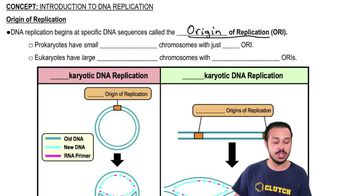
  • Origin of Replication
    Specific DNA sequences where replication begins, with one origin in prokaryotes and multiple in eukaryotes.
  • Replication Fork
    Y-shaped regions where DNA is unwound and replication occurs bidirectionally.
  • Okazaki Fragments
    Short DNA segments synthesized on the lagging strand during replication.
  • Supercoiling
    The over-winding of DNA that can inhibit replication, relieved by topoisomerase.
  • Replication Bubble
    An unwound region of DNA where replication forks are present and DNA synthesis occurs.
  • RNA Primer
    Short RNA sequences synthesized by primase to initiate DNA synthesis.
  • Bidirectional Replication
    DNA replication that proceeds in both directions from the origin at replication forks.
  • DNA Gyrase
    A type of topoisomerase in prokaryotes that alleviates supercoiling ahead of the replication fork.