Skip to main content
Anatomy & Physiology
My Course
Learn
Exam Prep
AI Tutor
Study Guides
Textbook Solutions
Flashcards
Explore
Try the app
My Course
Learn
Exam Prep
AI Tutor
Study Guides
Textbook Solutions
Flashcards
Explore
Try the app
Back
Introduction to Hemodynamics definitions
You can tap to flip the card.
Hemodynamics
You can tap to flip the card.
👆
Hemodynamics
Study of blood flow, pressure, and resistance in the cardiovascular system.
Track progress
Control buttons has been changed to "navigation" mode.
1/15
Related flashcards
Related practice
Recommended videos
Introduction to Hemodynamics quiz
Introduction to Hemodynamics
10 Terms
Introduction to Hemodynamics quiz #1
Introduction to Hemodynamics
10 Terms
Introduction to Hemodynamics
19. The Blood Vessels
7 problems
Topic
Jason
Anastomoses
19. The Blood Vessels
3 problems
Topic
19. The Blood Vessels - Part 1 of 2
4 topics
10 problems
Chapter
Jason
19. The Blood Vessels - Part 2 of 2
4 topics
9 problems
Chapter
Bruce
Guided course
2:29
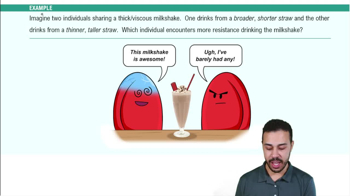
Introduction to Hemodynamics Example 3
2988
views
54
rank
Guided course
6:40
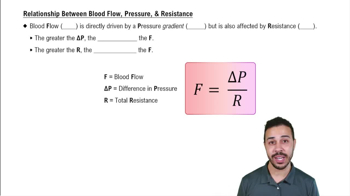
Relationship Between Blood Flow, Pressure, & Resistance
3921
views
63
rank
Guided course
6:24
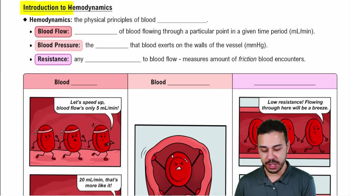
Hemodynamics
4545
views
98
rank
Terms in this set (15)
Hide definitions
Hemodynamics
Study of blood flow, pressure, and resistance in the cardiovascular system.
Blood Flow
Volume of blood moving through a point in the cardiovascular system per minute.
Blood Pressure
Force exerted by blood on vessel walls, measured in millimeters of mercury.
Resistance
Opposition to blood flow, influenced by vessel diameter, length, and blood viscosity.
Cardiovascular System
Network of heart and blood vessels circulating blood throughout the body.
Arterioles
Smallest arteries, crucial in regulating resistance through vasoconstriction and vasodilation.
Peripheral Resistance
Resistance encountered by blood away from the heart, mainly in arterioles.
Viscosity
Thickness of blood, affecting its flow through vessels.
Vessel Diameter
Width of a blood vessel's lumen, significantly affecting resistance.
Vessel Length
Distance blood travels through a vessel, impacting resistance.
Hydrostatic Pressure
Pressure gradient driving blood flow from high to low pressure areas.
Friction
Resistance encountered by blood as it moves along vessel walls.
Vasoconstriction
Narrowing of blood vessels, increasing resistance.
Vasodilation
Widening of blood vessels, decreasing resistance.
Milliliters per Minute
Unit of measurement for blood flow rate in the cardiovascular system.
 BackBack

 2:29
2:29