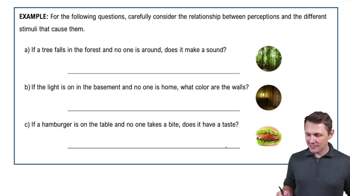
How does the perception of a stimulus differ from the actual stimulus in special senses? Provide an example.
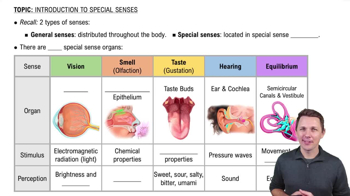
The perception of a stimulus is how our brain interprets the information detected by sense organs, which can differ from the actual physical stimulus. For example, in vision, the eyes detect electromagnetic radiation (light), but we perceive this as brightness and color.
 Back
Back
 5:05
5:05