Introduction to the Autonomic Nervous System definitions Flashcards
Introduction to the Autonomic Nervous System definitions
1 student found this helpful You can tap to flip the card.
Control buttons has been changed to "navigation" mode.
1/15
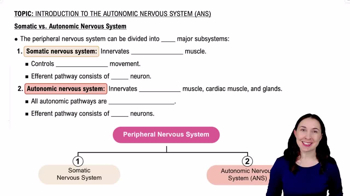
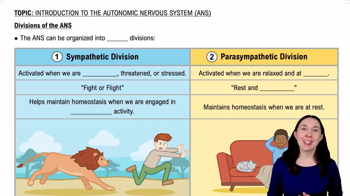
Autonomic Nervous SystemA division of the peripheral nervous system that controls involuntary bodily functions and maintains homeostasis.Sympathetic DivisionPart of the autonomic nervous system responsible for the fight or flight response and maintaining homeostasis during physical activity.Parasympathetic DivisionPart of the autonomic nervous system that promotes rest and digest activities, maintaining homeostasis during relaxation.Autonomic ToneThe balance between sympathetic and parasympathetic divisions, adjusting to environmental cues.HomeostasisThe body's ability to maintain stable internal conditions despite external changes.Fight or Flight ResponseA physiological reaction to perceived threats, mobilizing energy resources for action.Rest and Digest SystemAnother name for the parasympathetic division, focusing on relaxation and digestion.Efferent PathwayThe motor pathway in the nervous system, consisting of neurons that carry signals to effectors.Peripheral Nervous SystemThe part of the nervous system outside the brain and spinal cord, including somatic and autonomic systems.Somatic Nervous SystemA division of the peripheral nervous system controlling voluntary movements and reflexes.Visceral SystemsBody systems involving smooth muscle, cardiac muscle, and glands, controlled by the autonomic nervous system.Emotional ArousalA state of heightened physiological activity in response to emotional stimuli.EffectorsOrgans or cells that act in response to neural signals, often innervated by both autonomic divisions.Cardiac MuscleInvoluntary muscle tissue found in the heart, regulated by the autonomic nervous system.Skeletal MuscleVoluntary muscle tissue controlled by the somatic nervous system, responsible for movement.