Introduction to the Central Nervous System definitions Flashcards

Introduction to the Central Nervous System definitions
1 student found this helpful
Control buttons has been changed to "navigation" mode.
1/15
  • Central Nervous System
    Comprises the brain and spinal cord, serving as the control center for the body, managing basic and complex functions.
  • Cerebrum
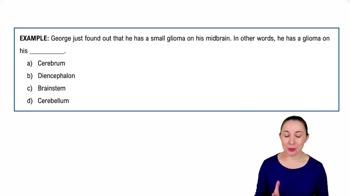
    The largest brain region, responsible for cognitive functions, with a distinctive wrinkly appearance.
  • Cerebral Cortex
    The outer layer of the cerebrum, characterized by its wrinkly appearance, involved in higher brain functions.
  • Diencephalon
    Central forebrain structure, including the thalamus, hypothalamus, and epithalamus.
  • Brainstem
    Connects the cerebrum to the spinal cord, consisting of the midbrain, pons, and medulla oblongata.
  • Cerebellum
    Coordinates motor activity and regulates movement, located at the brain's back.
  • Neural Tube
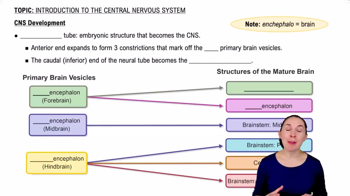
    Embryonic structure that develops into the central nervous system, forming brain vesicles and the spinal cord.
  • Prosencephalon
    The embryonic forebrain, which matures into the cerebrum and diencephalon.
  • Mesencephalon
    The embryonic midbrain, developing into the midbrain of the brainstem.
  • Rhombencephalon
    The embryonic hindbrain, maturing into the pons, medulla oblongata, and cerebellum.
  • White Matter
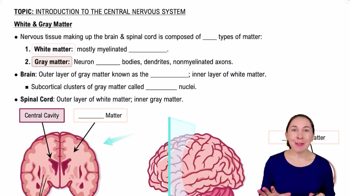
    Composed of myelinated axons, giving it a white appearance, located internally in the brain.
  • Gray Matter
    Contains neuron cell bodies and nonmyelinated axons, forming the brain's outer layer.
  • Basal Nuclei
    Clusters of gray matter located subcortically, involved in various brain functions.
  • Thalamus
    Part of the diencephalon, acting as a relay station for sensory information.
  • Hypothalamus
    Located in the diencephalon, it regulates homeostasis and endocrine functions.