Lymph from which regions of the body is drained into the right lymphatic duct?
The right lymphatic duct drains lymph from the right upper limb, right side of the thorax, and right halves of the head and neck.
How is lymph moved through lymphatic vessels?
Lymph is moved through lymphatic vessels primarily by the contraction of surrounding skeletal muscles, pressure changes during breathing, and the presence of valves that prevent backflow.
What mechanism is not used to propel lymph through lymphatic vessels?
Heart pumping
By what mechanism is lymph moved through lymph vessels?
Skeletal muscle contractions
What distinguishes lymphatic vessels from veins?
Transport of lymph
Where are pathogens filtered from lymph?
Pathogens are filtered from lymph in the lymph nodes.
Which lymphatic ducts receive lymph from the body regions?
The right lymphatic duct and the thoracic duct receive lymph from different body regions.
What kind of nutrients does the lymphatic system carry to the bloodstream?
Lipids
Which part of the body does the right lymphatic duct drain?
Right arm
Where does the lymphatic system empty into the cardiovascular system?
The lymphatic system empties into the cardiovascular system at the junction of the internal jugular and subclavian veins.
What are three functions of the lymphatic system?
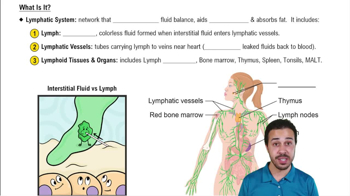
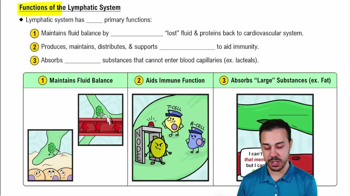
The lymphatic system maintains fluid balance, aids immunity, and absorbs dietary fats.
Which nutrients are absorbed by the lymphatic system?
Lipids
What structure filters foreign particles from the lymph vessels?
Lymph nodes filter foreign particles from the lymph vessels.
What is the role of the thymus in the lymphatic system and in immune responses?
The thymus is involved in the maturation of T cells, which are crucial for immune responses.
What is the role of skeletal muscle contractions in the flow of lymph?
Skeletal muscle contractions help propel lymph through the lymphatic vessels by compressing them.
Defense of the body against harmful substances is the function of what part of the lymphatic system?
Lymph nodes and lymphocytes are responsible for defending the body against harmful substances.
The lymphatic system is important for which three functions?
The lymphatic system is important for maintaining fluid balance, aiding immunity, and absorbing dietary fats.
Where does lymph come from?
Lymph is formed from interstitial fluid that enters lymphatic vessels.
What is not a major function of the lymphatic system?
Oxygen transport
What role does the lymphatic system have in influencing body fluids?
The lymphatic system maintains fluid balance by returning leaked fluids and proteins to the cardiovascular system.
What type of blood cells does lymph contain?
White blood cells
Lymph from the right lymphatic duct drains which areas of the body? Check all that apply. A) Right arm B) Left leg C) Right side of the head D) Left arm
A) Right arm, C) Right side of the head
Which structure is not involved in the flow of lymph?
Heart
How are lymphatic vessels similar to veins?
Lymphatic vessels are similar to veins in that they both have valves to prevent backflow.
From what fluid is lymph formed?
It is formed from interstitial fluid
What lymphatic structures trap bacteria in the posterior oral cavity?
Tonsils trap bacteria in the posterior oral cavity.
Which two of the following statements regarding lymphatic vessels are correct? A) They transport blood B) They have valves C) They are part of the cardiovascular system D) They transport lymph
B) They have valves, D) They transport lymph
What moves lymph through the lymphatic system?
Lymph is moved through the lymphatic system by skeletal muscle contractions, respiratory movements, and valves.
What role does lymph play in the circulatory system?
Lymph returns leaked fluids and proteins back to the cardiovascular system, maintaining fluid balance.
In what way are lymphatic vessels unlike veins in the cardiovascular system?
Lymphatic vessels transport lymph, not blood, and are part of the lymphatic system, not the cardiovascular system.
What is a false statement about the lymphatic system regarding oxygen transport?
It transports oxygen
Which lymphatic organ begins to deteriorate following puberty?
The thymus begins to deteriorate following puberty.
What nutrient must enter the lymphatic system before entering the bloodstream?
Dietary fats must enter the lymphatic system before entering the bloodstream.
Which function is not associated with the lymphatic system?
Oxygen transport
What is the major function of the lymphatic system?
The major functions of the lymphatic system are maintaining fluid balance, aiding immunity, and absorbing dietary fats.
How does lymphatic fluid differ from blood?
Lymphatic fluid differs from blood in that it does not contain red blood cells and is formed from interstitial fluid.
 Back
Back

 3:32
3:32